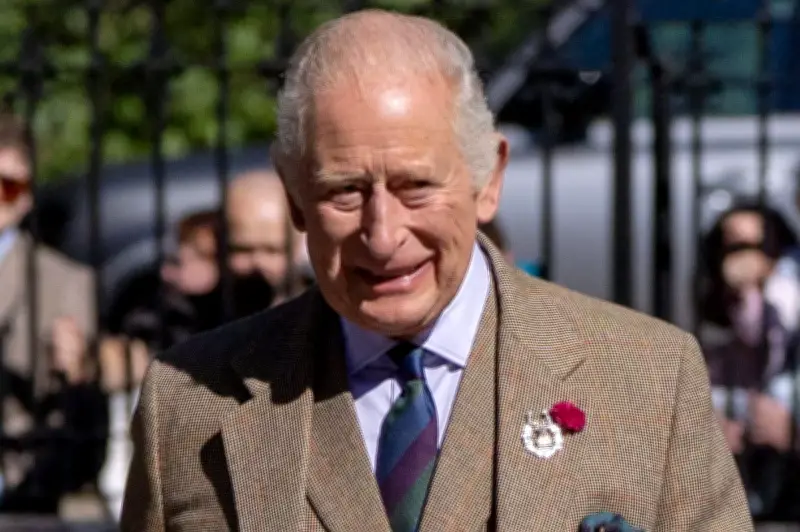
The King has “significantly increased” the number of engagements he is carrying out, a Treasury minister said as he outlined changes to royal funding.
Dan Tomlinson explained that Queen Elizabeth II was not carrying out a large number of foreign engagements or state visits towards the end of her reign, so expenditure on public duties has now increased.
His comments came as the House of Commons approved a motion designed to update the formula for funding the British monarchy after a review by the Royal Trustees.

Sovereign Grant Bill tabled
The Sovereign Grant Bill was then tabled, legislation that will set the core annual funding for the Sovereign Grant at £99.9 million in 2027-28.
The Sovereign Grant is the annual funding to support the monarch’s official duties and the work of the Royal Household including staffing, official travel and the maintenance of occupied royal palaces.
This money comes as a percentage of the profits of the Crown Estate, a collection of lands and property in the UK that belongs to the reigning monarch, the rest of which goes to the Exchequer.
Funding levels and Crown Estate percentage
For the 10 years to 2027, there has been a temporary uplift to the grant to fund the Buckingham Palace reservicing programme. With this work nearing completion, the overall Sovereign Grant will reduce from £137.9 million.
However, there has been a significant increase in the core funding to £99.9 million, up from £72.1 million in 2025-26 and £51.8 million in 2024-25. The percentage of the Crown Estate’s net profits that go towards the Sovereign Grant will be around 20.5%, rather than 12%.
Assessment of Royal Household needs
Treasury minister Mr Tomlinson said: “This recommendation was made based on an assessment of the Royal Household’s expected costs and the Crown Estate’s expected revenues between 2027 and 2032.
“The new level of the grant will ensure that the Royal Household can continue to deal with property maintenance backlogs following some years of constrained funding during the pandemic.
“It will also allow the Royal Household to replace ageing systems to strengthen cybersecurity and to install energy-efficient heating systems.”
The costs of refurbishing royal palaces was £18 million in 2016-2017, but will next year be £33.6 million, he said.
On the increase of the core funding, Mr Tomlinson added: “That reflects this bottom-up assessment that has taken place, looking across the needs of the Royal Household and making sure that it is being funded adequately for the work, for the public duties that His Royal Highness the King and the royal family carry out.
“And it is worth pointing out, of course, that those activities have increased significantly in recent years.
“Towards the end of her reign, the late Queen was not carrying out a large number of foreign engagements, and also was hosting a smaller number of state visits.
“The King has increased the engagements that he is carrying out on our behalf as part of his public duties, and that has involved more expenditure in terms of staff costs and making sure that those engagements and the benefits that in terms of the representation of our country and supporting good causes here in the UK can get the funding and the support that they need.”