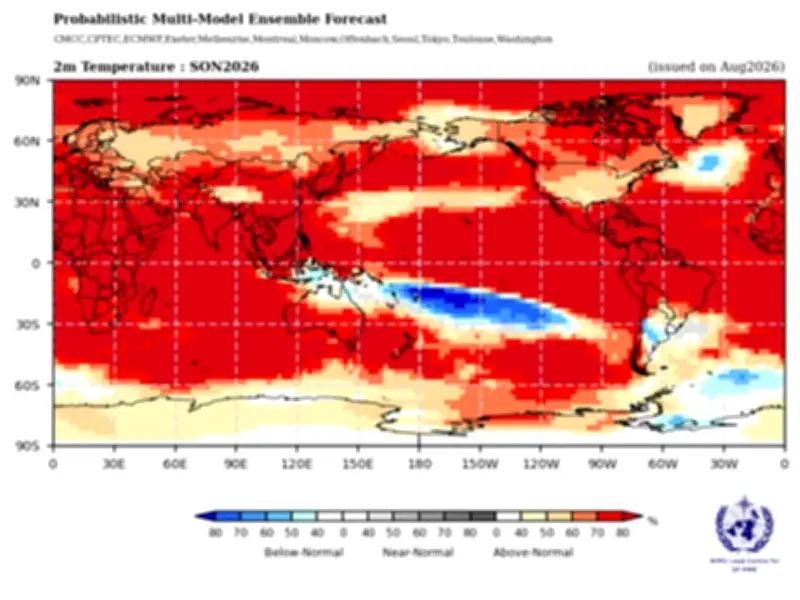
Forecasters are predicting that this year's El Niño weather phenomenon, dubbed 'The Super El Niño', could be the strongest on record, bringing intense winds, scorching heat and potentially dangerous storms worldwide.
The prediction comes from what meteorologists view as an unsustainable rise in ocean temperatures over the last 12 months, which when absorbed into the wider atmosphere looks likely to play havoc with the Pacific's weather systems, causing a significant worldwide series of knock-on events.
UK Weather Impacts
While El Niño is better known for its impact on the Americas than on the UK, Britain does still feel the impact of the massive weather event. With 2026's Super El Niño likely to cause stronger storms and temperature fluctuation than ever before, Brits ought to brace for more significant impacts than usual.

While many people incorrectly think that El Niño simply means an increase in temperature, the reality is far more complicated, especially in the UK. While the weather event is likely to boost global temperatures on average, with some predicting its impact could lead to 2027 being the hottest ever year, in the past its effects have led to colder winters in Britain.
According to the UK Met Office, “El Niño can also be associated with colder and calmer late winter periods in the UK”, while Prof Bill McGuire, Professor Emeritus of Geophysical Hazards at UCL said: “Powerful El Niños typically bring mild, stormy autumns and early winters to the UK, followed by bitter cold, although this isn’t set in stone.”
While a colder, and potentially snowy winter may be on the cards, Autumn 2026 could see slightly warmer and wetter conditions than usual, with the Met's Chief Meteorologist Ian Lisk warning: "The latest seasonal forecasts suggest an increased likelihood of wetter than average conditions as we move through autumn, which would be consistent with the historical influence of El Niño events."
Flash Flood Risk
Experts are warning that Britain is at a greater risk of dangerous flash flooding due to these wetter than usual conditions following an unusually hot and dry summer.
Dr Akshay Deoras, climate scientist at the National Centre for Atmospheric Science and Department of Meteorology, University of Reading, said: “El Niño has no robust link to the UK's annual mean temperature or rainfall, but it can influence seasonal variability, particularly increasing the likelihood of a wet, windy and mild autumn followed by a cooler, drier winter. After an exceptionally dry summer in Wales and England, the ground may be hard and less able to absorb intense rainfall. Heavy downpours could therefore run off quickly, increasing the risk of flash flooding, surface water flooding and disruption. Strong winds could also cause damage and add to pressure on transport and infrastructure."
Food Shortages and Holiday Chaos
Experts are warning that adverse impacts of the so-called Super El Niño could lead to shortages and price rises in the UK. Climate scientists are warning that these "indirect" effects could include the cost of food and fuel, as well as potential shortages caused by increased pressure put on global supply chains.
Dr Akshay Deoras said: "[This year's El Niño's] biggest consequences may instead come indirectly, as disruption to global agriculture, energy demand and commodity markets feeds through into food prices, energy costs and supply chain pressures."
Part of the reason that El Niño can cause so much devastation is because it is incredibly hard to predict, something Brits should be aware of when booking their holidays, especially around the end of this year and the start of the next. Professor Liz Stephens, Professor in Climate Risks and Resilience at University of Reading says: "We would expect this El Niño event to peak around November / December this year, but the enormous amount of energy which is released as the warmer Pacific waters heat the atmosphere above it will continue to affect weather patterns globally well into 2027."
Much of South America and the US is expected to be impacted by the Super El Niño, with the likes of California and Florida at particularly high risk. As for mainland Europe, experts warn that, similarly to the UK, impacts are likely to include a wetter autumn and colder winter.