A partial solar eclipse will be visible across the UK on Wednesday, August 12, and experts are urging people to protect their eyesight. The event occurs when the Moon passes between the Sun and Earth, but the three bodies are not perfectly aligned, leaving the Sun with a crescent shape.
Looking directly at the Sun without specialized eye protection is dangerous, except during the brief total phase of a total solar eclipse. NASA states that it is unsafe to view the Sun through a camera lens, binoculars, or a telescope without a special-purpose solar filter secured over the front of the optics.
Why proper eye protection is essential
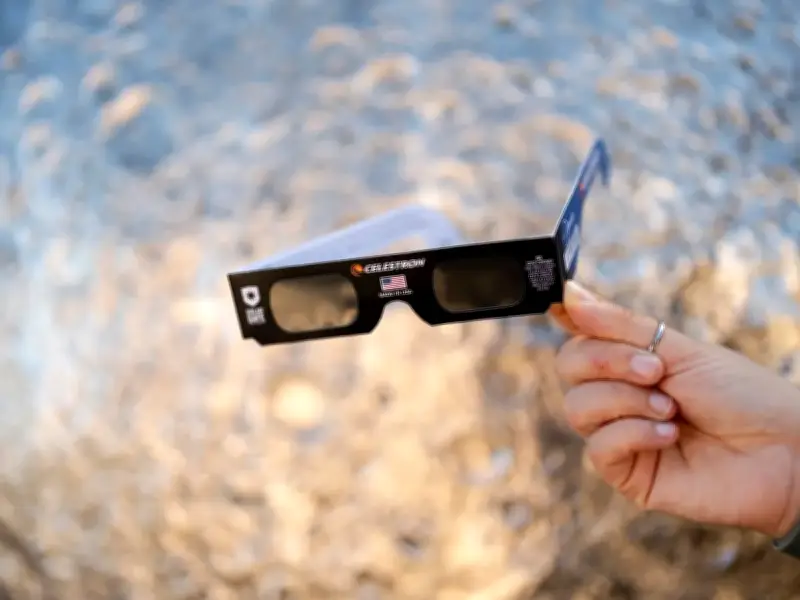
During partial or annular eclipses, there is no period of totality when the Moon completely blocks the Sun. Therefore, it is never safe to look directly at the eclipse without proper eye protection. NASA advises: "When watching a partial or annular solar eclipse directly with your eyes, you must look through safe solar viewing glasses or a safe handheld solar viewer at all times. Eclipse glasses are not regular sunglasses. Safe solar viewers are thousands of times darker and ought to comply with the ISO 12312-2 international standard. NASA does not approve any particular brand of solar viewers."
Indirect viewing methods
If you don't have eclipse glasses or a handheld solar viewer, you can use an indirect viewing method, which does not involve looking directly at the Sun. NASA suggests making your own eclipse projector using a cardboard box, a white sheet of paper, tape, scissors, and aluminium foil. The space agency explains: "With the Sun behind you, sunlight will stream through a pinhole punched into aluminium foil taped over a hole in one side of the box. During the partial phases of a solar eclipse, this will project a crescent Sun onto a white sheet of paper taped to the inside of the box. Look into the box through another hole cut into the box to see the projected image."
The UK Health Security Agency also recommends using a colander to view the eclipse, as a way to avoid permanent eye damage. The agency warns: "During an eclipse, the sun appears dimmer than usual. This makes it easier to look at directly – and that's precisely the problem. The reduced brightness can override the body's natural reflex to look away, allowing intense sunlight to reach and damage the retina. This damage happens without causing any pain, so you may not realise harm is occurring until it's too late."
Timings and how to watch
The Royal Observatory will be livestreaming the solar eclipse on August 12 for those who cannot watch it outside. The peak of the eclipse will occur between 7.05pm and 7.16pm, depending on location. 'First contact' in Manchester and Liverpool is at 6.13pm, while in London, Bristol, and Cardiff it is at 6.17pm, and in Cornwall at 6.18pm.
The next total solar eclipse visible from the UK will not occur until 2090. The closest eclipse to total for the British Isles will be on September 3, 2081, when up to 99% of the Sun will be obscured by the Moon.