The North East and Yorkshire have moved to prolonged dry weather – the stage before drought – as the National Drought Group placed the region at an increased level. The move comes amid a dry start to August worsening conditions, with nowhere now deemed in normal status.
The East Midlands, Lincolnshire & Northamptonshire, Kent & East Sussex, and Solent & the South Downs became the latest to move into drought status today, meaning almost three-quarters of England is now in drought. The group has warned that the entire country is experiencing 'pressure on water resources', with over 70% of England now in the midst of a flash drought.
Driest July in 190 years
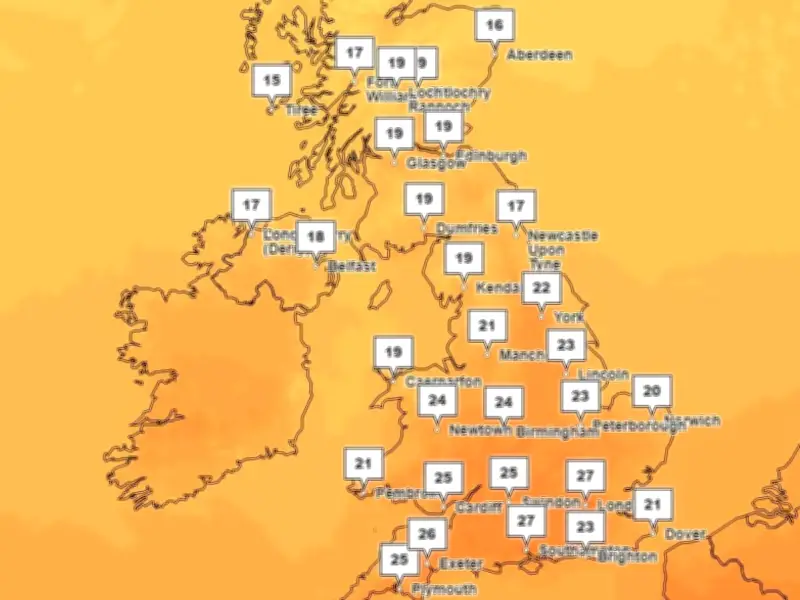
This comes about due to a combination of very low rainfall and higher temperatures, and follows the driest July in 190 years. The issue is continuing, with warnings of more dry weather and another heatwave which could see temperatures reach the mid 30s in some areas, as just 5% of the expected rainfall has actually happened so far this month. Ongoing work to prepare included monitoring the situation and reducing water leaks.
Tony Grayling, of the Environment Agency, and Chair of the National Drought Group, said: "Drought conditions are worsening and will continue to do so until we see significant and sustained rainfall. We know the hot and dry weather is taking a real toll on farming and there will be long-lasting impacts on our environment."
Government steps up support
He added: "We want everyone to stay safe and hydrated over the summer, but we need everyone’s help in using a little less water to make sure our current water reserves last. Every drop we can save is a drop more for your local farmers, local wildlife and local rivers."
The government is also stepping up to help with the drought response, with water companies and members of the public told to do their bit to save the crucial resource by Water Minister Emma Hardy, whose department is actively considering ways to provide more support. Emma Hardy MP said: "We know how challenging this summer has been, especially for our hard-working farmers who are at the sharp end of climate change and an increasing number of floods and droughts."
Long-term measures
She added: "We are stepping up our support including working to make it easier for farmers to build more on-site irrigation reservoirs. We are also delivering long-term change in the water industry to reduce leaks and deliver nine new reservoirs and water transfer schemes to secure supplies."
"As we move through this period of drought, I expect water companies to take every available step to minimise leakage and support customers in using water wisely. I also want to thank people for following the restrictions, where in place, as they are an important tool to safeguard essential water supplies and protect the environment."
There have now been three droughts in the last five years, in 2022 and 2025, showing the impact that global warming is having on the country. Mainland Europe is also struggling to cope with the conditions, with extremely low water levels in rivers across the continent.