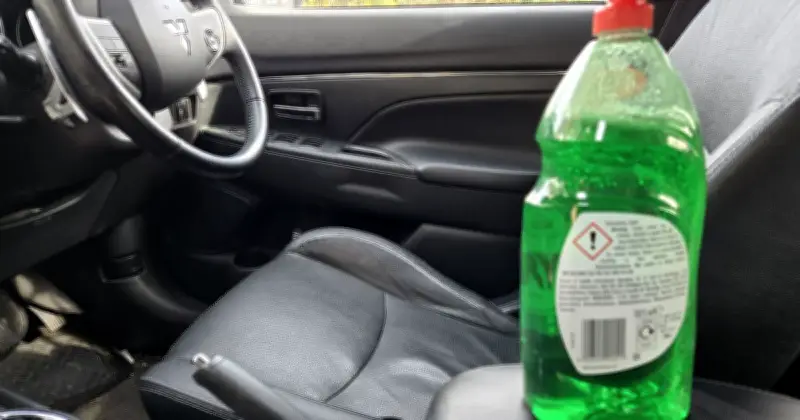
Drivers across the UK are being urged to put washing up liquid in their cars to help prevent condensation this autumn. The autumn season often brings changeable weather, with sunny spells quickly turning to rain, while blustery winds and cooler temperatures are common at this time of year.
Met Office forecasts cooler conditions
The Met Office is forecasting a “smorgasbord of weather types” over the coming days, with swings from balmy conditions to cooler climes. With a drop in temperature on the cards, condensation can present a problem for drivers.
Condensation is a common occurrence in the colder months and forms when warm air inside cars meets the cold surface of windows, turning into water droplets as it cools, which can appear as fog or mist. It generally forms overnight when outside temperatures are lower and tends to be more pronounced in bouts of cold weather.
The Met Office is forecasting frost overnight in some areas this weekend, with cooler temperatures expected to last into next week, so drivers can expect to wake up to foggy and damp windows in the coming days.
Met Office Chief Forecaster Andy Page said: “Clearing skies during Saturday evening – courtesy of a transient ridge of high pressure – will bring cooler conditions overnight, with the possibility of frost in more prone spots in northern parts of the UK.”
Simple remedy with washing up liquid
Fogging on windows can take a frustrating amount of time to clear, which is not ideal when you need to get going in a morning, but there is a simple remedy to help avoid this problem – and all you need is a bit of washing up liquid.
According to experts, rubbing a thin layer of washing up liquid onto dry windows inside your car is a cheap and effective way to help prevent condensation forming, as the liquid contains surfactants which reduce the surface tension of the glass, making it harder for warm, moist air to condense into water droplets.
Instead of forming a layer of water, the washing up liquid essentially creates a barrier that prevents water droplets clinging to the glass and causes moisture to remain in the air, or be more easily wiped away.
In its online advice on preventing condensation on windows, eco cleaning company Homethings said: “By taking a small drop of washing up liquid and rubbing it into the condensation-prone window with a dry cloth you can completely stop the issue all together.
“The washing up liquid forms a barrier on the surface of the windows, preventing the water from sticking. So in the space of just a few minutes, you can put a stop to the damp, mould, and mildew that wet windows can cause.”
Additional tips for drivers
A bottle of washing up liquid can be picked up at Tesco for just 62p, making it a cheap and easy way to tackle this common seasonal problem, but it needs to be reapplied regularly as it is not a permanent fix.
Experts say washing up liquid is best used in combination with other settings in your car, including using your air conditioning and your heater, as well as opening windows to promote air flow and using dehumidifying products like packets of silica gel to absorb excess moisture from the air.
In its advice on how to use washing up liquid in your car to prevent condensation and fogging, online car parts retailer MicksGarage said: “Take one wet dish cloth, squeeze a good blob of washing up liquid onto it, apply in a circular motion to the whole inside of the screen, then take another clean, dry cloth and gently wipe off.
“The idea is to try and leave some of the washing up liquid on the screen while still getting a dry streak free finish. I think you'll be pleasantly surprised by the results! Apparently shaving foam also works just as well.
“The technique above will greatly reduce the amount of condensation on the inside of your screen but it won't eliminate it altogether, you're still going to need to use the car's demister, but what are the ideal combination of settings you should use? Well let us tell you!
Heat on full, air con on, recirculating air off, open windows slightly.”