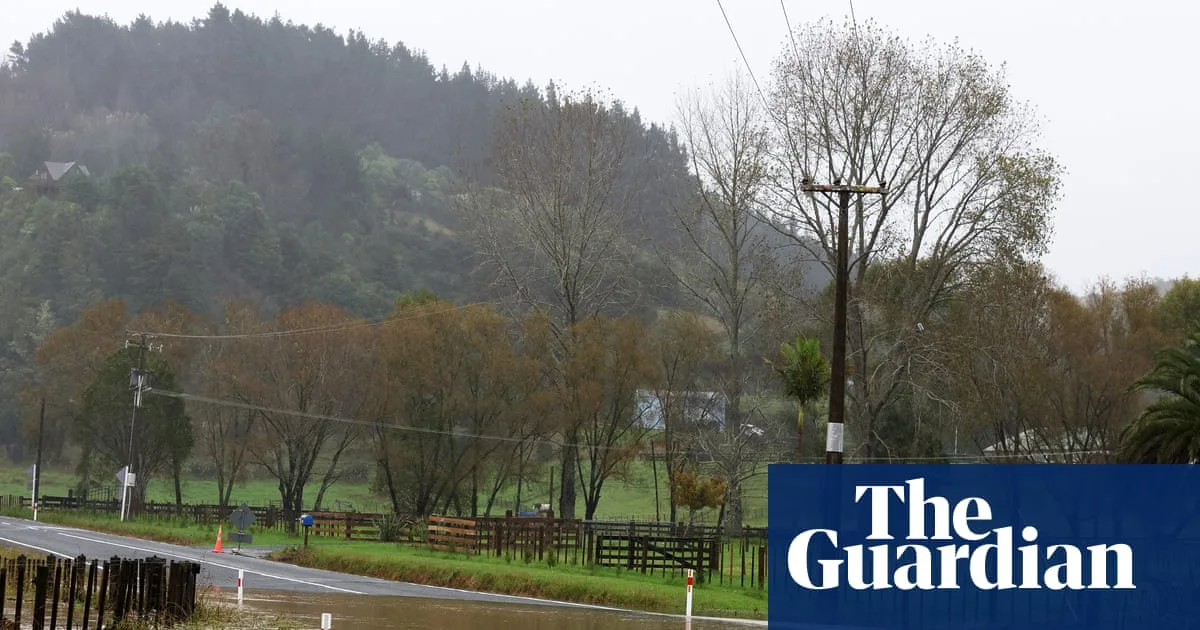
Cyclone Vaianu made landfall on New Zealand's North Island on Sunday, bringing destructive winds exceeding 130 km/h (80 mph), heavy rain, and large swells. The storm crossed the coast near the Maketu peninsula, prompting emergency declarations and red-level wind warnings in several regions.
Emergency Management Minister Mark Mitchell said the cyclone tracked towards the eastern fringes of the North Island, sparing Auckland from the worst conditions. However, he warned that stronger winds and swells were expected after landfall, with high tides combining with large swells posing a risk of coastal inundation from 2 pm local time (0800 GMT).
The storm forced hundreds of residents to evacuate, including mandatory evacuations at 270 properties in the Whakatane District. Power was knocked out to 5,000 homes, with approximately 2,000 restored by Sunday afternoon. New Zealand Defence Force personnel and heavy equipment were deployed to assist with evacuations.
MetService reported wind gusts of 130 km/h, 24-hour rainfall totals exceeding 100 mm (4 inches) in Whangarei, and wave heights over 6 metres (20 feet). Air New Zealand cancelled more than 90 turboprop flights, primarily from regional North Island airports, while domestic jet and international services faced delays. Fire and Emergency New Zealand responded to over 100 calls for assistance related to wind damage and surface flooding.
Conditions were expected to ease as Cyclone Vaianu moved down the North Island, exiting at Hawke's Bay on Sunday evening. MetService head of weather news Heather Keats described the system as life-threatening, but noted improvement from Sunday night onwards. The storm evoked memories of Cyclone Gabrielle in 2023, which killed 11 people and displaced thousands.