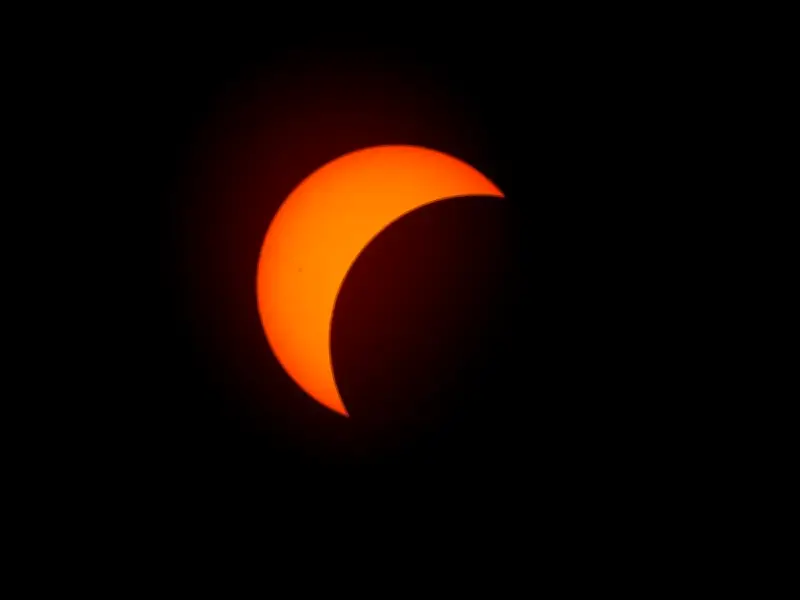
The UK will experience near darkness this evening as a partial solar eclipse takes place, with more than 90 per cent of the sun covered by the moon at around 7pm. The exact time and coverage will vary depending on location.
Tonight's event is the fullest eclipse seen in the UK since the total solar eclipse in 1999.
How to watch the eclipse safely
Brits have been rushing to find solar eclipse glasses, but many high street stores and online marketplaces have sold out. Alternative methods include making a pinhole projector from a box and foil, or using a colander with small holes.
Using a phone to record the eclipse is not recommended as it could damage the device. Professional live streams offer a safe way to watch the event.
Live streams from the Royal Observatory and NASA
The Manchester Evening News is streaming the eclipse from the Royal Observatory in Greenwich, London, on YouTube. The observatory, holding a viewing event tonight, has sold out of eclipse glasses, shifting approximately 15,000 pairs in the last month.
NASA is also streaming the event from multiple locations in Europe, available on the Manchester Evening News YouTube channel.
Timing and visibility across the UK
The eclipse will be viewable in the UK between 6.17pm and 8.06pm. Devon, Cornwall, and the westernmost parts of Pembrokeshire in Wales will see the eclipse at its fullest, with 94 to 96 per cent of the sun obscured.
People have been warned against using 'knock-off' glasses as they may not fully protect eyes. Doctors say even brief exposure to direct sunlight can cause lasting vision damage. Only ISO 12312-2 certified solar eclipse glasses are safe, and sunglasses are not sufficient.
Mohamed Elalfy, a consultant ophthalmologist and president of the Royal College of Ophthalmologists, said: “The safest way to enjoy the eclipse is to observe it indirectly, such as by watching a live broadcast. Looking directly at the sun during a solar eclipse can cause damage to the retina, potentially damaging the cells responsible for sharp central vision. Crucially, the retina has no pain receptors, so people will not feel the damage as it happens. Symptoms may only become apparent several hours later and can include blurred vision, a central blind or dark spot, distorted vision, reduced colour perception and increased sensitivity to light. While some people recover over weeks or months, others can be left with permanent visual impairment.”