The UK is set to witness its most spectacular solar eclipse in a generation on Wednesday, August 12, with the event offering the widest coverage across the country since 1999.
The Moon will move between the Sun and Earth, blocking its light and casting a small shadow on Earth for just under two hours between 6.17pm and 8pm, according to Royal Museums Greenwich.
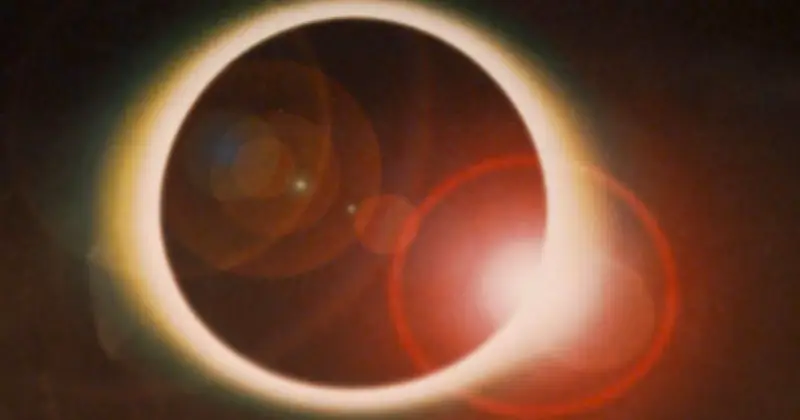
Shortly after 6pm, the Moon will take a bite out of the Sun and what will remain is a downward-facing crescent, slowly getting more slender over the next hour. While parts of Europe will get to see the eclipse in its entirety, the UK will get just a glimpse, at its peak approximately 90% to 96% of the Sun will be covered.
Peak coverage and timing
It will take just 15 minutes for the peak moment to sweep from the very north of Scotland down to Land’s End in Cornwall, which means the moon shadow will sweep over the surface of Britain at a speed of nearly 2,500 miles per hour.
The best locations to view the eclipse are in the far south western areas of Devon and Cornwall, where up to 96% of the sun will be obscured by the moon.
London and Cardiff will both witness the eclipse at 7.13pm, but Cardiff will enjoy a greater spectacle, with 93.2% of the Sun obscured compared with 91.4% in London. While in Belfast, it will cover 93.09% of the sun at 7.08pm.
Times across the UK
Skygazers in the rest of the UK will likely see the moon obscure 90% to 92% of the sun – with 91.79% expected in Birmingham at 7.12pm, 90.74% in Inverness at 7.03pm, 90.71% in Edinburgh at 7.06pm and 90.22% in Newcastle at 7.07pm.
Those most keen to catch a sight of the fullest possible solar eclipse should avoid the easternmost parts of the UK, where only 88% to 90% of solar coverage is expected. These include the coasts of Norfolk, Yorkshire and Aberdeenshire, as well as the Orkney and Shetland Islands.
Edinburgh and Scotland will be the first places in the UK to see the eclipse, with the event expected to occur at 7.05pm and 7.06pm respectively.
European viewing and safety advice
Across large parts of Europe, including France, Belgium, Switzerland and northern Italy, viewers will see between 88% and 95% coverage. Reykjavik in Iceland and Spanish cities A Coruna, Oviedo, Zaragoza, Bilbao and Valencia will see a total eclipse on Wednesday, in which the Moon fully obscures the sun.
The next time the Moon obscures as much of the Sun will be in 2081, and the next total solar eclipse in the UK will be in 2090.
It's important you never look directly at the Sun, even during an eclipse when some of its intense light is blocked. Doing so can severely damage your eyes. The safest way to view the event is by using certified eclipse glasses that meet the international safety standard (ISO 12312-2) or by using specially designed solar filters on telescopes, binoculars, or cameras.