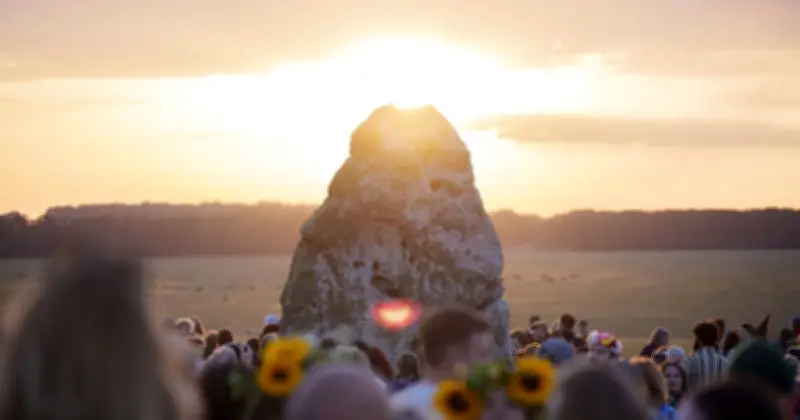
The summer solstice will be celebrated across the northern hemisphere this weekend, marking the beginning of astronomical summer. This year, the event takes place on Sunday, June 21, 2026, at 9.24am BST, bringing the longest day and shortest night of the year.
What is the summer solstice?
The summer solstice in the UK signals midsummer, with daylight hours reaching their peak and nighttime at its minimum. Although often thought of as a full day, the solstice is actually a precise moment when the Northern Hemisphere is tilted most directly toward the Sun. This alignment causes the Sun to appear at its highest position in the sky, resulting in extended daylight. In parts of the UK, including London, daylight can last between 16 and 18 hours, depending on location. The event typically occurs between June 20 and 22 each year, with slight variations due to Earth's orbit and leap years.
When is the summer solstice in 2026?
In 2026, the summer solstice occurs in the UK on Sunday, June 21, at 9.24am BST. This precise moment marks the official start of astronomical summer.
How is the summer solstice celebrated at Stonehenge?
Stonehenge is aligned with the sunrise on the summer solstice, making it a significant site for annual celebrations. Pagans, druids, and many others gather to perform rituals symbolising rebirth and the changing of seasons. It is one of the few times visitors are allowed to walk among the ancient stones. Large crowds assemble to watch the sunrise above the Heel Stone. This year, English Heritage permits open access from the evening of Saturday, June 20, through to the morning of Sunday, June 21, with sunrise expected at around 4.52am. Due to high demand, parking has already sold out, and visitors are encouraged to use public transport, as heavy traffic is anticipated from the afternoon of June 20.
Does the summer solstice mark the beginning of summer?
Astronomically, the summer solstice does mark the beginning of summer. It occurs when the Northern Hemisphere is tilted most toward the Sun, and from that point, astronomical summer officially starts. However, meteorological summer begins on June 1 and ends on August 31. The Royal Museums of Greenwich explains that the tilt of the Earth produces seasons, with the Northern Hemisphere receiving more direct sunlight and longer days in summer. However, there is a lag between the solstice and peak temperatures because the atmosphere and oceans take time to heat up.