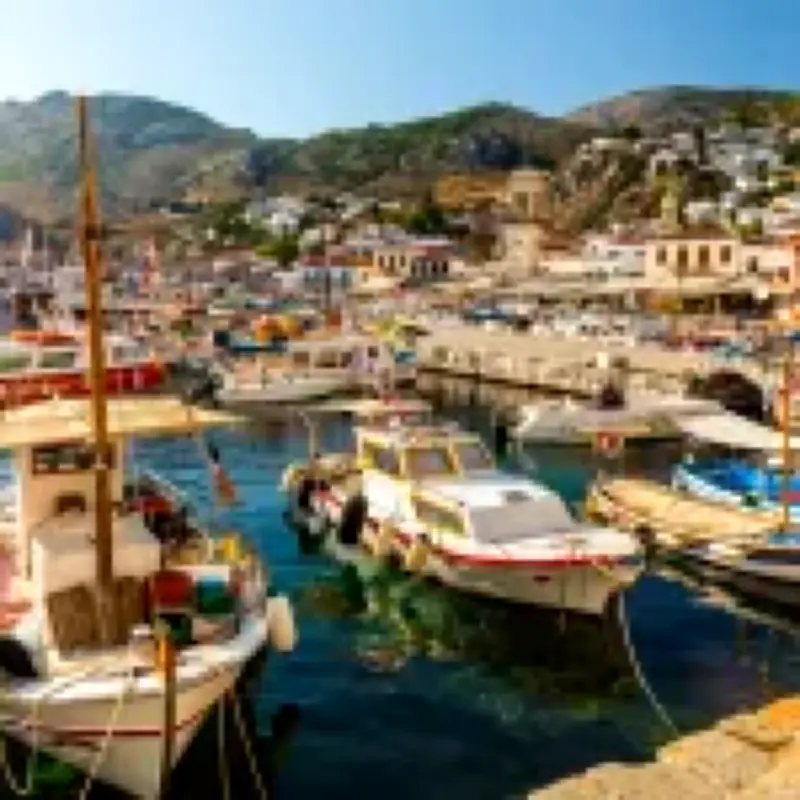
Hydra, a car-free Greek island a short ferry ride from Athens, offers timeless charm, clear waters, and a bohemian history that once attracted Leonard Cohen. The island is only 10 miles long, with most of it uninhabitable, and has no cars, bikes, or vehicles of any kind.
An enchanting escape from modern chaos
British journalist Rosie Boycott recommended Hydra because, she said, the island is surrounded by the clearest water you will ever swim in. She also said it is a place to be, not a place to be seen. Rows of donkeys wait to greet ferries from the mainland, ready to carry visitors and their belongings up the cobbled lanes to lodgings.
Past Hydra port, the island's only town, the lanes are tranquil time warps of a Greece of days gone by. There are no new buildings, and a sense of serenity has been preserved by a construction ban in the town itself, a Greek National Monument which has scarcely changed in a century. The town rises up the hillside like an ancient amphitheatre, with Mount Eros, the island's highest peak, towering above it.
A history of shipbuilders, sponge-fishers, and artists
In the late 18th and early 19th centuries, Hydra was a powerful shipbuilder nicknamed 'Little England'. During the 1900s, it was reinvented as a sponge-fishing hub. That industry spawned the filmed-on-location movie Boy on a Dolphin (1957), in which Sophia Loren played a Hydriot sponge-diver. This saw Hydra become a hotspot beloved by bohemians such as Pablo Picasso throughout the 1960s.
Hydra's most famous resident was Leonard Cohen. Together with his muse Marianne Ihlen and a spirited community of writers, the musician and poet found profound creative inspiration here. Locals erected a plaque in his memory on the walk to Kamini. By the port, Roloi Cafe, once known as the kafenion O Katsikas, is where Cohen and a generation of artists hung out, and where he played his first concert to a handful of friends.
Swimming, sunsets, and getting there
Today, the island remains one of Greece's coolest and, for the most part, least pretentious. When visited in early September, the weather was still in the high 20°Cs, warm enough to spend all day wandering the coves that embroider the coast and swimming in the Aegean. The beaches are mostly rocky ledges and concrete swimming platforms, which adds to the appeal. Avlaki was a favourite spot, with exceptionally clear water and a deep, dazzling blue that shape-shifts in the sunlight.
There are no direct flights to Hydra from the UK. Visitors must fly to Athens, then catch a ferry from Piraeus port, which takes around 90 minutes across the Saronic Gulf. Proximity to the capital makes Hydra popular for day-trips, but once you arrive, you'll wish you booked for longer. As Cohen once said, 'there is nowhere in the world where you can live like you can in Hydra, and that includes Hydra'.