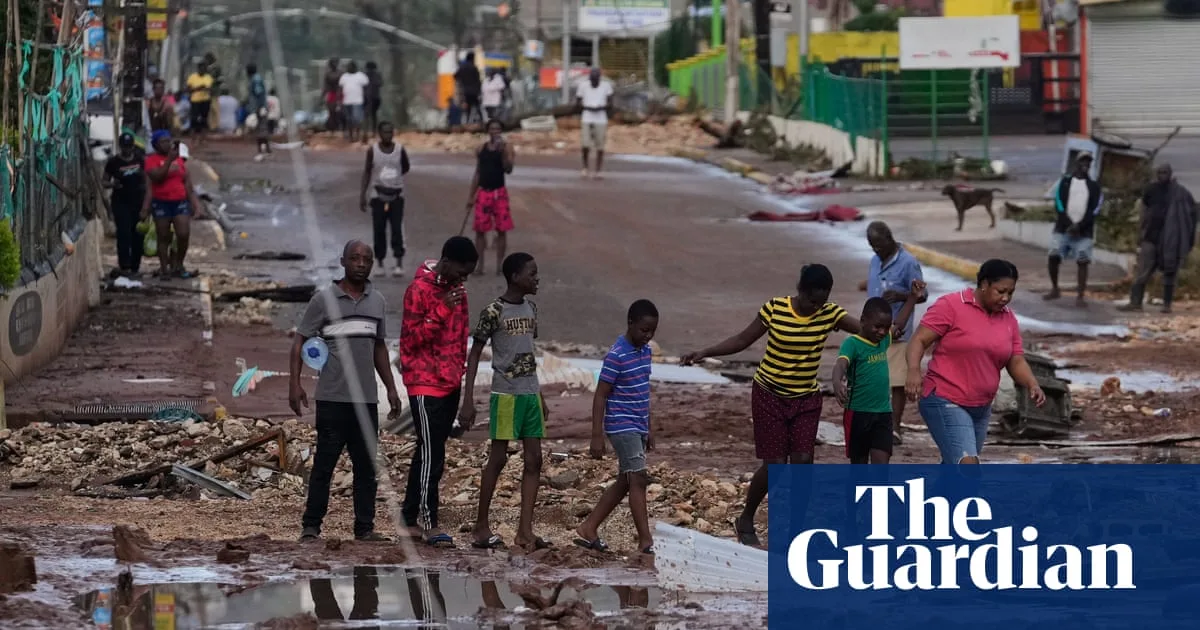
One month after Hurricane Melissa tore through the Caribbean, Jamaica continues to grapple with the aftermath of what has been described as the most intense tropical cyclone to hit the island in nearly two centuries. The category 5 storm left a trail of devastation, with entire neighbourhoods submerged, roofs ripped from buildings, and critical infrastructure severely compromised.
The Jamaican government declared the country a disaster area, granting authorities extra powers to issue mandatory evacuation orders and prevent price gouging. Close to 15,000 people remain in shelters, and over 530,000 residents—roughly one-fifth of the population—are still without electricity. The western parts of the island bore the brunt of the storm, which moved slowly across the ground, exacerbating damage.
In Mandeville, the capital of Manchester parish, residents described the hurricane as “very deadly” but expressed relief that their area was not as badly hit as others. Lisa Henry, a 35-year-old resident, said she spent the storm praying and noted that the roof of a local school had been torn off. “It’s going to take back the country,” she said.
Janet Lewis, a shop owner from Clarendon parish, recounted the terror of the storm: “The rain and the constant, constant, strong, strong breeze just took the roof off from above me and dropped it on the side of the house … It has affected my business. Jamaica needs help.” Her plea echoes across the island as authorities continue to assess the full extent of the damage.
The United Nations resident coordinator in Jamaica, Dennis Zulu, described “tremendous, unprecedented devastation” during a press briefing, noting that preliminary assessments show a country devastated to levels never seen before. Alexander Pendry of the British Red Cross echoed this sentiment, calling the hurricane an “unprecedented catastrophe” and warning that the impact on communities would be “shattering and long lasting.”
Efforts are now focused on reopening airports to facilitate the delivery of aid, with Transport Minister Daryl Vaz emphasising the urgency of restoring air links. Meanwhile, climate scientists point to human-caused global heating as a contributing factor to the rapid intensification of modern storms like Melissa, raising concerns about the future frequency and severity of such events.