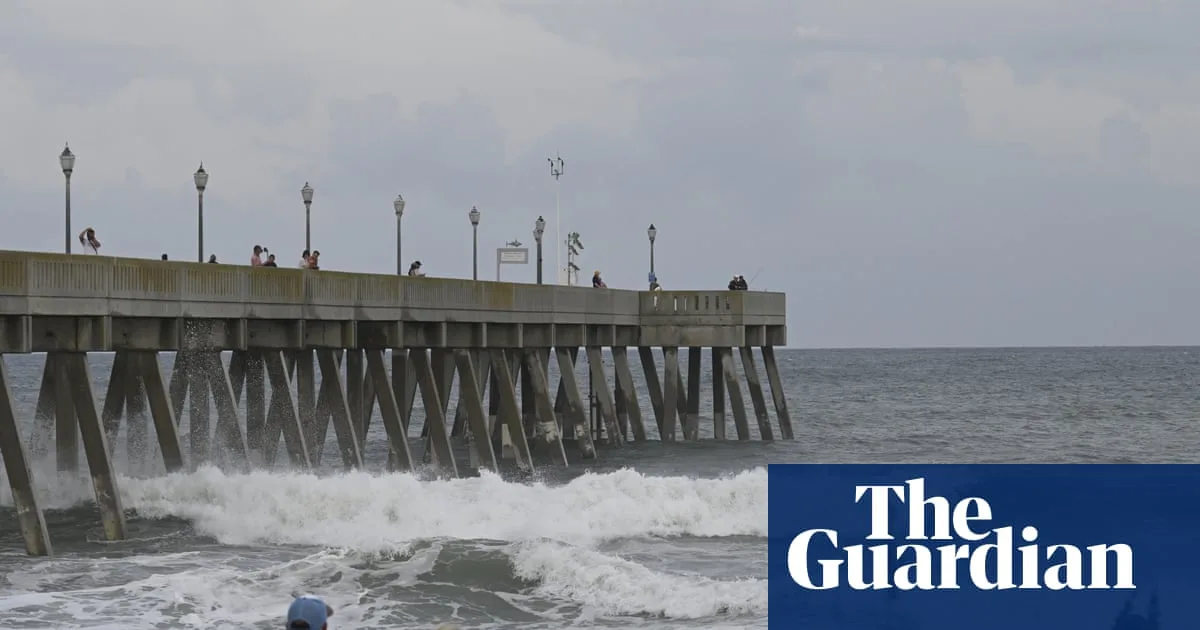
Hurricane Erin, a large category 2 storm with winds of 105mph, was moving away from the North Carolina coast on Thursday morning after battering the state's Outer Banks with intense winds, large waves, storm surge and flooding. Although Erin is not expected to make landfall, weather officials warn that its effects are not over, with life-threatening rip currents, flooding and dangerous surf forecast along parts of the east coast through Friday.
North Carolina's governor, Josh Stein, declared a state of emergency on Wednesday, deploying emergency resources to assist coastal communities. Mandatory evacuation orders were issued for Ocracoke and Hatteras islands, with more than 2,000 people evacuated. By Wednesday evening, Highway 12 on Hatteras Island was closed due to worsening conditions, with photographs showing sections of the road completely submerged. The road remained closed on Thursday morning.
The National Weather Service warned that parts of coastal North Carolina could continue to face flooding, storm surge and high surf throughout Thursday and into Friday. A storm surge warning remains in effect, with water levels expected to rise two to four feet above ground level in some areas. "Numerous roads will likely be impassable under several feet of water and vehicles will likely be submerged," the agency said, advising residents to move cars to higher ground.
The NWS office in Newport and Morehead City said the "impacts will peak today", with the worst conditions expected along the Outer Banks during Thursday's high tide cycles. Significant impacts could linger into Friday due to powerful swell energy and elevated tides. Tropical storm conditions are expected in parts of Bermuda on Thursday, and tropical storm-force wind gusts are possible across the mid-Atlantic and southern New England coasts through early Friday.
Hazardous beach conditions are forecast along the entire east coast over the next several days, with forecasters warning of life-threatening rip currents and strong surf. Authorities in several states have urged residents to stay out of the water, and some beaches, including those in New York City, have been closed to swimming. Coastal flood alerts remain in place for low-lying areas across the east coast, including sections of Delaware and New Jersey.