Thousands of European troops from 11 nations, including France and the UK, are taking part in an unprecedented military exercise in southeastern Poland, preparing for a potential postwar mission in Ukraine designed to stabilise the country and rebuild its armed forces once the conflict concludes.
Spearheaded by France and the UK, the multinational force represents a non-NATO military initiative of the so-called Coalition of the Willing, a broader political grouping of 37 nations backing Ukraine.
First deployment test for the coalition
The two-week drill, which kicked off on November 9, marks the first time this coalition has tested its capability to deploy in Ukraine after the war. It is designed both to assess deployment strategies and to send a clear signal to Russia and the Trump administration that European nations are ramping up their military commitments.
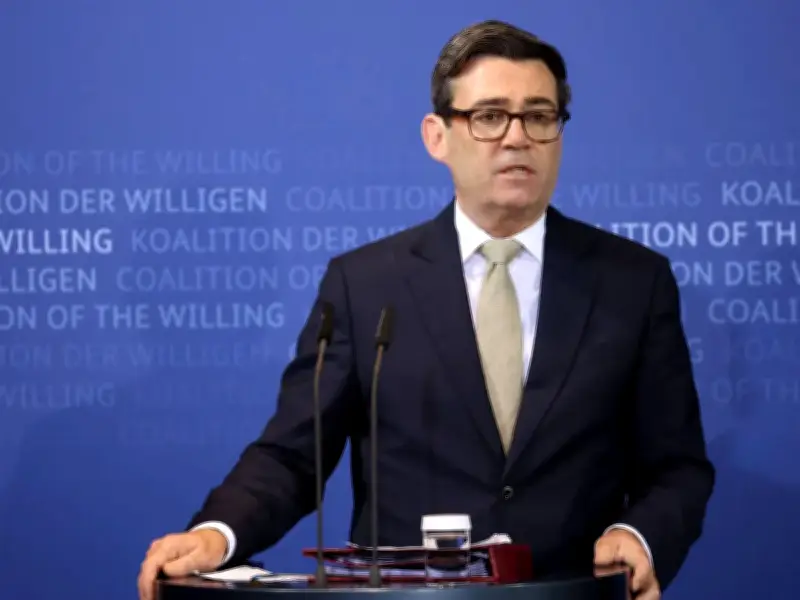
The exercise coincided with leaders from Ukraine and nearly 40 other delegations gathering in Berlin to reaffirm their support for Kyiv and examine Ukraine's postwar security arrangements. President Volodymyr Zelenskyy is determined to prevent another Russian invasion, while Moscow is pushing to keep the NATO military alliance away from its borders.
US envoys join Berlin talks
US envoy Jared Kushner declared on Thursday that he believes Russia is "comfortable" with NATO-like security guarantees for postwar Ukraine. Kushner and fellow US envoy Steve Witkoff travelled to Berlin to reassure European leaders regarding US President Donald Trump's efforts to bring an end to the nearly 5 year old war, following his historic trilateral discussions with Russian leader Vladimir Putin and Chinese President Xi Jinping.
Trump joined the Berlin discussions following his meeting with Putin, according to Kushner. Ukraine has long pursued NATO membership, particularly for its collective defence guarantee under the alliance's Article 5, whereby an attack on one member is deemed an attack on all. It remains unclear what form potential security guarantees would take, and whether Russia and Ukraine would ultimately accept them.
Coalition ready to secure peace
Following Thursday's meeting, German Chancellor Friedrich Merz said the military exercise in Poland "shows that the Coalition of the Willing is ready to contribute with the United States of America to securing a peace."
Approximately 2,800 personnel from Belgium, Estonia, France, Germany, Lithuania, the Netherlands, Spain, Sweden and the UK are participating in the fortnight-long exercise, with Poland providing logistical support and Turkey participating from Istanbul.
French President Emmanuel Macron said on Thursday that 1,100 troops from France were deployed, and that "we have terrestrial, air but also maritime operations, a dozen countries that are active in this coalition."
Planning and training details
The Polish exercise follows 12 months of planning by the Multinational Force-Ukraine, or MNF-U, said UK brigadier Campbell Close, who serves as deputy commander for operations of the French Army's 1st division. That division is overseeing the land component of the "Koalicja" exercise in Poland.
"This is a deployment exercise," Close said on Monday at the Nowa Deba military training ground in southeastern Poland. "We have rehearsed the entry into theater, the arrival of thousands of troops and now move on to Nowa Deba training area where we are conducting integration training with eight allies. I should stress we are a defensive force," Close said.
He also heaped praise on Poland for a "no mean feat" in handling the enormous logistical challenge of moving thousands of vehicles, personnel and their equipment within a tight timeframe.
Should a ceasefire be agreed, the force would be tasked with rebuilding and bolstering Ukraine's armed forces, providing the reassurance required to reopen the country's airspace, and assisting with mine clearance in the Black Sea, Lt. Gen. Tom Bateman, commander of MNF-U, revealed earlier in November. The force would not carry out peacekeeping or peace-monitoring duties.
Coalition troops made their way to Poland via sea, air and land, the Polish government confirmed in an official statement, before continuing their journey by rail and road to Nowa Deba, where joint training has been ongoing ever since.
Exercises included transporting personnel and equipment across Poland, conducting joint command-and-control drills, and deploying fighter jets alongside an aerial refuelling tanker in readiness to assist Ukraine in reopening its airspace. Troops also operated surveillance drones, practised countering drone attacks, and honed their trench warfare skills in densely wooded terrain.
The Coalition of the Willing group of nations was initially conceived to provide Ukraine with security guarantees akin to NATO's Article 5. With no firm commitment from NATO to fulfil this role, France and the UK pressed ahead with a separate European proposal, bringing together countries prepared to come to Ukraine's assistance if the need arose.
Last year, Putin warned that any foreign troops on Ukrainian soil would be deemed "legitimate targets."
While the multinational force may serve a purely defensive purpose, it would nonetheless need to be a "combat force for their own force protection," according to Ed Arnold, a Senior Associate Fellow at the RUSI military think tank in London.