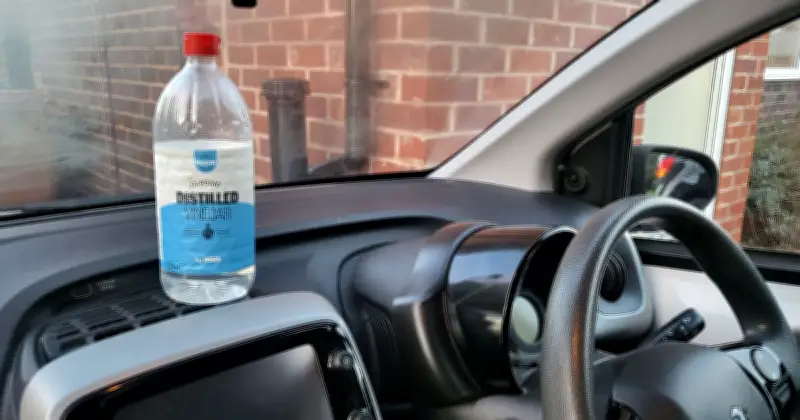
Drivers across the UK are being urged to use white vinegar in their cars to prevent condensation as the first winter snow is forecast this week. The Met Office predicts much colder conditions, with frost and snow showers expected by Wednesday, November 11, affecting Scotland and northern parts of England. By Thursday, November 12, temperatures are forecast to plunge below average more widely across the UK, turning colder still on Friday as frost becomes more widespread, with stronger winds to the far North-east making conditions feel especially cold.
Met Office Forecast and Snow Expectations
Met Office Chief Meteorologist Jason Kelly said: "Snow showers could briefly fall on lower ground in northern Scotland and the Northern Isles, mainly Shetland, overnight on Wednesday and into Thursday. However, snow may only settle on higher ground and this is relatively normal for the time of year."
The cold, wintry conditions mean drivers can expect to wake up to find a layer of condensation on their car windows, a common problem during winter. It forms when warm air inside a car meets the cold glass, causing water droplets to condense on the windows as the air cools, which can appear as fog or mist.
Simple Vinegar Solution to Tackle Condensation
Condensation generally forms overnight when outside temperatures are lower, and the problem is more pronounced in bouts of cold weather. Fogging can take a frustrating amount of time to clear, but a cheap and simple solution involves spraying windows with a solution of white vinegar and water, which creates a protective barrier that prevents moisture from settling and thereby reduces condensation.
A 1.14L bottle of white vinegar costs just 65p at Tesco, making it a cheap solution that also cleans windows in the process, though it will need to be reapplied frequently throughout the winter.
Expert Advice and Legal Penalties
In its online advice on tackling condensation, Loco Windows Fascias said: "A home-made solution is a great way to deal with condensation on windows. You will need a mixture of two cups of white vinegar and two cups of water. You can use a spray bottle to apply the solution to the window or you can simply wipe it on. Then let it dry with a soft cloth."
To increase effectiveness, some experts recommend adding a few drops of washing up liquid to the mix, as this reduces the surface tension of the water on the window, causing moisture to spread into a thin, invisible layer rather than forming droplets. Cardiff Window Cleaner Ltd explains: "A great way to clear away condensation and prevent it from coming back is by mixing a homemade solution. Simply mix two cups of water and two cups of white vinegar, then add a couple of drops of dishwashing soap. Pour this mixture into a spray bottle and spray it straight onto your window. White vinegar creates a protective barrier, and soap breaks down the surface tension of the droplets on your window. We suggest using a spray bottle to create a very thin protective cover, which will dry up by itself."
Failure to clear condensation from the windscreen before setting off could result in a £1,000 fine and three penalty points on the licence, so tackling the problem with white vinegar is a cheap way to avoid it.