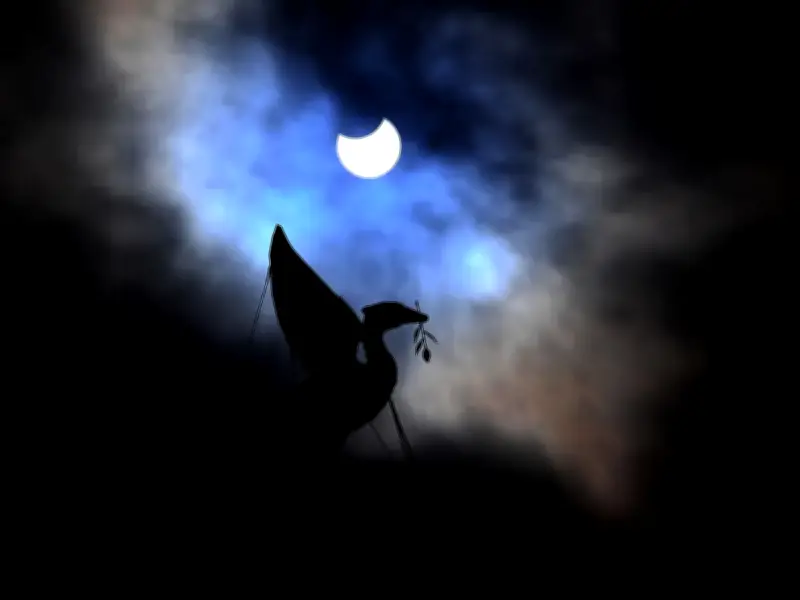
The whole of the UK will see its most dramatic partial solar eclipse in almost three decades today, August 12. According to Royal Museums Greenwich, this solar eclipse will be the most coverage seen from the UK and Ireland since the 1999 eclipse.
Eclipse Coverage and Timings
The UK last witnessed a solar eclipse in March 2025, but only around 30-40% of the Sun was covered by the Moon. Now, more than 90% of the Sun will be obscured, causing the sky to dim as the Moon blocks out the sunlight.
Parts of Spain, northern Portugal and Iceland will be treated to the first total solar eclipse visible over mainland Europe in 27 years. The next total solar eclipse visible from the UK won't be until September 23 2090.
What Causes a Solar Eclipse?
A total solar eclipse happens when the Moon passes between the Sun and Earth, completely blocking the face of the Sun. People located in the centre of the Moon's shadow when it hits Earth will experience a total eclipse.
Royal Museums Greenwich has shared timings for watching the partial solar eclipse from various locations across the UK and Ireland, including the peak of the eclipse. In Liverpool, the moment the Moon first covers the disc of the Sun is expected to be at 6.13pm.
Viewing the Eclipse from the UK
The eclipse maximum will happen at 7.10pm, before the spectacle comes to an end at 8.03pm when the Moon is no longer covering the Sun. During a partial solar eclipse there is only a part of the Sun covered, giving it a crescent shape.
From the UK, the partial eclipse will last around one hour and 50 minutes. The partial solar eclipse will take place as the Sun is setting, and the Sun and Moon will become increasingly low on the horizon as the eclipse goes on.
The ECHO will be providing the latest updates throughout the day, including timings and best locations to watch the spectacle happen. Many of our reporters will be at different spots across Merseyside to watch the eclipse happen.