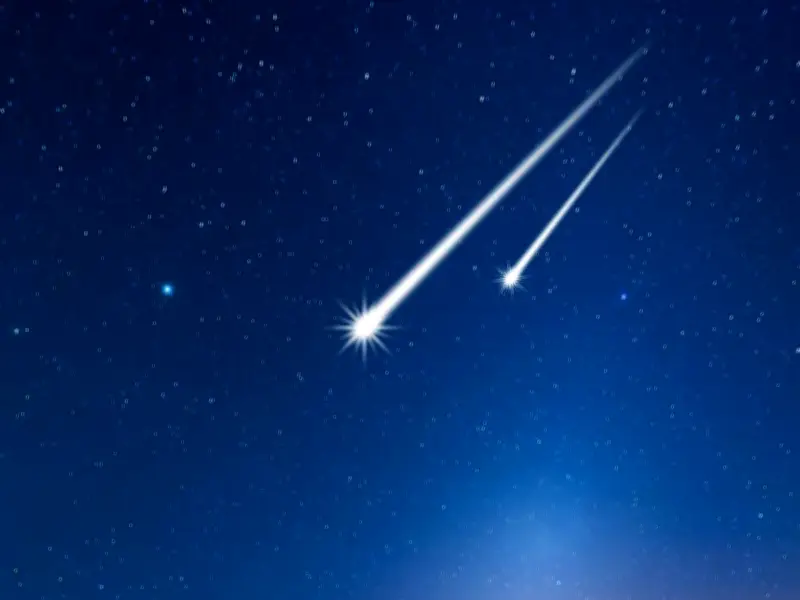
The annual Perseid meteor shower reaches its peak on Wednesday night, bringing hundreds of shooting stars to skies over Scotland, coinciding with the country's first major eclipse in decades.
Around 150 meteors will cross the sky every hour as Earth passes through a trail of debris from the Swift-Tuttle comet. Specks as small as a grain of dust or rice flare up under the pressure of the planet's atmosphere to create shooting stars, according to Royal Observatory Greenwich astronomer Dr Ed Bloomer.
Best Viewing Conditions
Dr Bloomer recommended stargazers wait half an hour to let their eyes adjust, adding: “Take a camping chair or something – if you had one, you would just sit down, and you would just relax, and you would just wait.”
He advised: “You want to get away from city lights, you want to get away from street lamps. If you’re looking out from your garden – it sounds obvious – but switch the kitchen light off, give yourself time to just put the phone away.”
People struggling to see the meteors can turn and watch through their peripheral vision as it is “a little bit better with low light conditions”, he said. As it is summer, viewers will also have to wait until relatively late at night for it to be dark enough to see the celestial show.
Visibility and Location
The astronomer added: “For us, it’s kind of one of the best (meteor showers), it’s kind of reliable, it’s long lived, it’s quite dense… it’s pretty active. You don’t need to really be in a very specific location, the hourly rate is fairly high, so I think even beginners will be I think satisfied having seen them.”
The meteor shower will be in the north-east as the sun is going down, Dr Bloomer added. He said: “However, it’s not available to everybody, because the further south you go… Perseid is lower and lower on the horizon.”
“The primary interest is for Northern Hemisphere observers – Perseid is pretty low for us here in the UK, but it is above the horizon… in fact, it’s above the horizon all day, but the problem is, of course, during the day, nothing’s going to be visible.”
Despite it being more visible in the north “the dominant thing is going to be, can you get yourself in a dark location”, he added. Getting into the middle of a field in the south east of England, in London, is going to be better than being in the middle of Aberdeen.”
Meteor Characteristics
Shooting stars generally only last a second or two and sometimes appear in flurries, the astronomer said. Rarer meteors the size of a fist or basketball will produce longer tails and are known as fireballs, he added. These can last five to 10 seconds, but Dr Bloomer said he has only ever seen one.
The level up is a bolide but “that’s a sort of national emergency type thing”, he added.