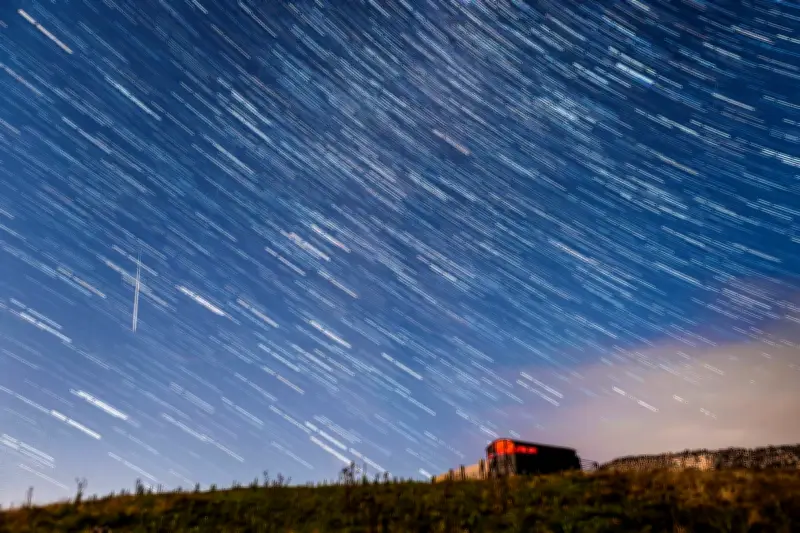
The annual Perseid meteor shower is set to peak on Wednesday night into the early hours of Thursday, following a solar eclipse visible from the UK on Wednesday evening before sunset.
According to the Royal Astronomical Society, the shower is usually one of the most spectacular of the year and will be visible across the UK if skies are clear.
Ideal Viewing Times
The ideal viewing time for Perseids is between midnight and 5.30am on Thursday morning. Some viewers should be able to see some meteors as soon as the sun sets, the society said.
Every summer, the Earth slams into a trail of debris from the Swift-Tuttle comet, which causes the Perseids. The meteoroids from the comet, mostly no bigger than a grain of sand, burn up as they hit the Earth's atmosphere at 36 miles per second, producing a shooting stream of light in the sky.
How to Watch
The shower meteors are named after the point in the sky where they appear to originate in the constellation of Perseus. Those hoping to catch the shower have been advised to stay away from artificial light, avoid built-up areas if possible, and try to find an unobstructed view of the sky.
Unlike many celestial events, meteor showers are easy to watch and no special equipment is needed, the society said.
Forecast and Eclipse Safety
Although the shower is set to peak overnight on 12 to 13 August, it will be active until 24 August. Clear skies are forecast for much of the UK on Wednesday evening and into the early hours of Thursday, according to the Met Office.
For those wishing to view the solar eclipse, experts have warned that eclipse glasses are important for safe viewing and that sunglasses are insufficient.