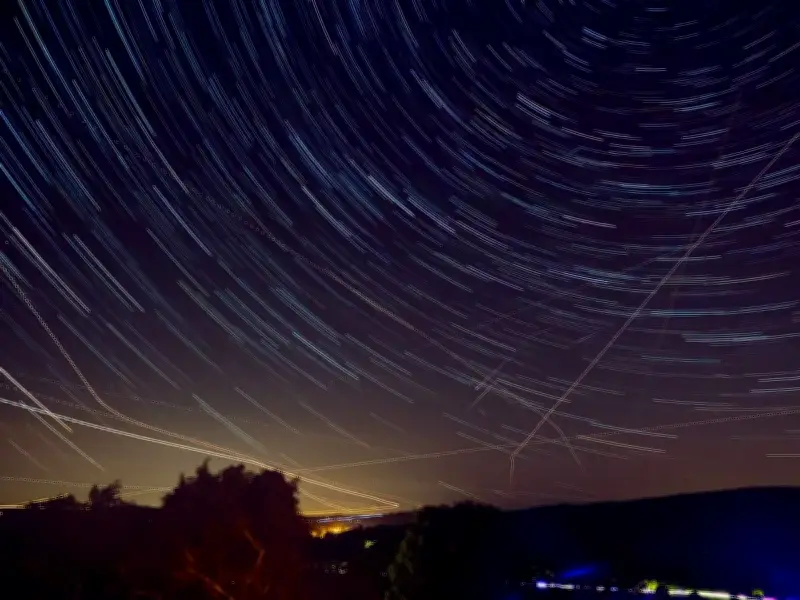
The Perseid meteor shower, one of the brightest displays of shooting stars in the astronomical calendar, is set to reach its peak on Wednesday (August 12) into the early hours of Thursday (August 13).
What causes the Perseids?
The annual event occurs when the Earth passes through debris left behind by Comet 109P/Swift-Tuttle. As tiny fragments enter Earth's atmosphere at extremely high speeds, the air in front becomes intensely compressed and heated, causing the particles to burn up. Some may turn into giant fireballs, while smaller pieces evaporate completely, leaving behind dazzling streaks of light.
Best time and place to watch
This year, the shower has been forecast to be most active between July and August. The peak follows a partial solar eclipse for Britons watching the night sky on Wednesday, and the Royal Observatory Greenwich says meteors can be spotted as soon as the Sun sets.
Experts say the display can be enjoyed without any specialist equipment on a clear night, but the best spots are away from artificial light, such as in the countryside or a local park.
Perfect dark sky conditions
Normally, the Moon acts as natural light pollution and can often block the dazzling display, but this year it will not be a problem as the shower coincides with a new Moon, creating a perfect dark night sky.
Time-wise, the best viewing window sits between midnight and 5.30am on August 13 this year, where it is forecast that the greatest number of meteors should be visible.