Following yesterday's solar eclipse, another breathtaking celestial event is taking place. This week is thought to be the first time the peak of the Perseid meteor shower has coincided with a solar eclipse.
Alfredo Carpineti, space and physics editor at IFL Science and author of the book Invisible Rainbows, said: "It's so exciting to have these two events happening on the same day. I've gone through 5,000 years' worth of eclipse data from NASA, and it looks like the first time there's an eclipse happening on the same day as the peak of a major meteor shower."
When is the Perseid meteor shower?
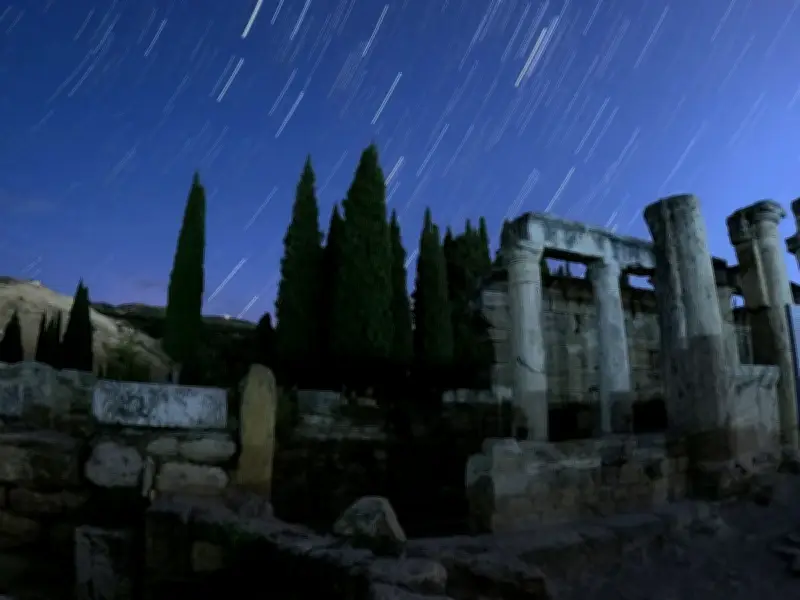
The Perseid meteor shower has actually been ongoing for weeks, but peaked in the early hours of this morning with around 100 shooting stars seen per hour.
Even if you missed the peak, Thursday night into Friday morning will still be a good time to spot shooting stars, as experts say around 50 will be visible in an hour in dark locations. Usually, the number of meteors drops off by 40-50 percent in the nights following the peak.
The Perseids are expected to last until August 24 - so there's a chance you can spot them in the early hours any day until then.
What time is best to see the Perseid meteor shower?
The best time to see the Perseid meteor shower in the UK is between midnight and 5:30am. Activity will pick up after dark, but the rates of shooting stars will peak during these early morning hours.
Viewing conditions are exceptionally good right now due to a New Moon. With the moon below the horizon, there is less lunar glare to wash out the fainter meteors.
How to see the Perseid meteor shower
The best places to see a meteor shower are in dark countryside or coastal locations, with little light pollution. Star-gazers should look at a 60-degree angle to the sky, wrap up warm, and bring a chair so they don't injure their neck by holding their head back for long periods of time.
It can take up to 40 minutes for human eyes to adjust to low light, so patience is required - as is vigilance not to check a phone. The Perseids are more visible from the Northern Hemisphere but may also be somewhat visible from the Southern Hemisphere.
Shooting stars occur when pieces of a comet break up as it nears the sun and heats up. The debris ends up in the path of Earth's orbit. The pieces of the comet are moving through space at the same time Earth is, and when they hit the Earth's atmosphere, smaller pieces are vapourised - leaving bright trails of light we call shooting stars - and larger meteors explode in fireballs, according to the Royal Greenwich Museum.
Those pieces 'slam into our atmosphere at speeds of between 7–45 miles per second', the Museum says, and 'the average speed for a Perseid meteor is 36 miles per second', or a staggering 129,600mph.