West Wales and parts of South-East Wales are set to be among the best places in the UK to see tonight's solar eclipse, according to the latest Met Office forecast. Weather maps show generally clear conditions across much of the country, with the clearest skies expected in West Wales, South Wales and parts of Mid Wales.
Clear skies expected across most of Wales
Met Office weather maps indicate that areas around Merthyr Tydfil, Llandovery, Newport, Torfaen and Monmouthshire could be among the better locations for an unobstructed view, although local conditions can vary considerably over short distances.
At 6pm, the maps show completely clear skies over South Wales and much of Mid Wales, with some cloud coverage expected in parts of North Wales, including St Asaph and Ruthin. By 7pm, around the time of the maximum eclipse, almost the whole of Wales is free of cloud apart from small patches over Wrexham and St Asaph. By 8pm, the sky over the whole of Wales is shown to be completely clear.
Pembrokeshire to see up to 96% coverage
West Wales stands out as the best location, with parts of Pembrokeshire expected to see as much as 96% of the sun obscured by the moon. Strumble Head, Rhossili Bay and Craig Goch Dam have also been highlighted as particularly attractive viewing locations.
The eclipse will begin across Wales at around 6.17pm, with the precise timing varying slightly from place to place. Maximum eclipse will occur at roughly 7.05pm to 7.16pm, before the event ends for UK viewers at around 8.10pm.
Advice for safe viewing
In Cardiff, the eclipse is expected to reach its peak at approximately 7.13pm, with around 93% of the sun covered. The westernmost parts of Pembrokeshire are expected to see the greatest coverage, with between 94% and 96% of the sun obscured. Elsewhere in Wales, the figure is expected to be broadly between 92% and 94%.
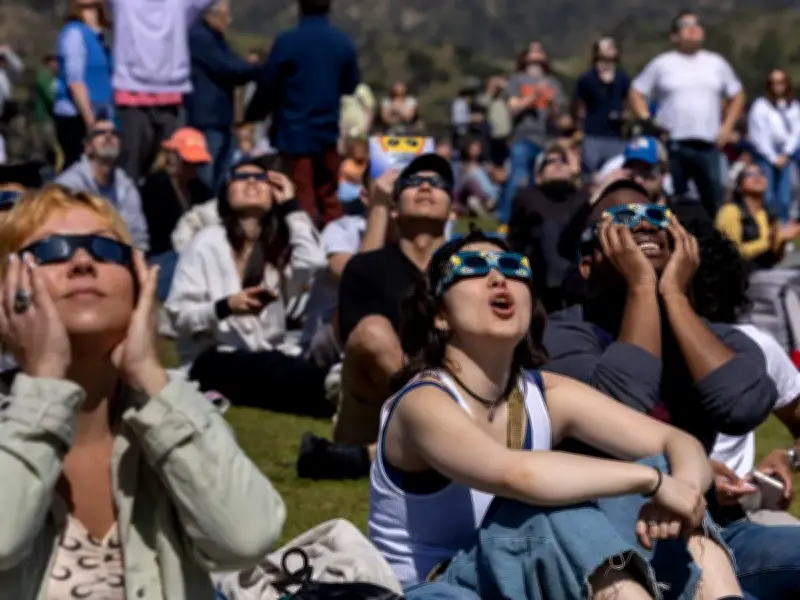
Astronomers are advising people to find a spot with a clear view towards the west, away from buildings, hills and trees. Eclipse watchers are urged not to look directly at the sun through ordinary sunglasses. Specialist eclipse glasses meeting the ISO 12312-2 safety standard should be used, or an indirect viewing method such as a pinhole projector.
Wednesday's event is the fullest solar eclipse visible from the UK since the total eclipse of 1999, and another eclipse of a similar magnitude will not be seen from the UK until 2081. The Perseid meteor shower also reaches its peak overnight on August 12-13, meaning anyone with clear skies could potentially follow the eclipse with a night of meteor watching.