The FIA is digitising its land speed record archive, offering unprecedented public access to a century of record-breaking machines and the drivers who risked their lives to push the limits of speed. The archive, stored in the FIA facility in Valleiry, France, includes documents, pictures, hand-written notes, and letters from record attempts dating back to the late 19th century.
Historic Records Digitised
The project is one of the first to be undertaken by the FIA as it digitises more than two million documents and pictures. Roger Banowetz, president of the FIA land speed records commission, said: "This is the first time they've been available outside of the boxes that were stored in Valleiry. I was pushing to get the land speed record archive digitised, it's really important to have that material available for everybody."
The archive includes early records from the dawn of motoring, such as Count Gaston de Chasseloup-Laubat's first mark in 1898 at 39.24mph, and Camille Jenatzy's breaking of the 100kmh barrier in 1899 in his torpedo-shaped car La Jamais Contente.
British Golden Age
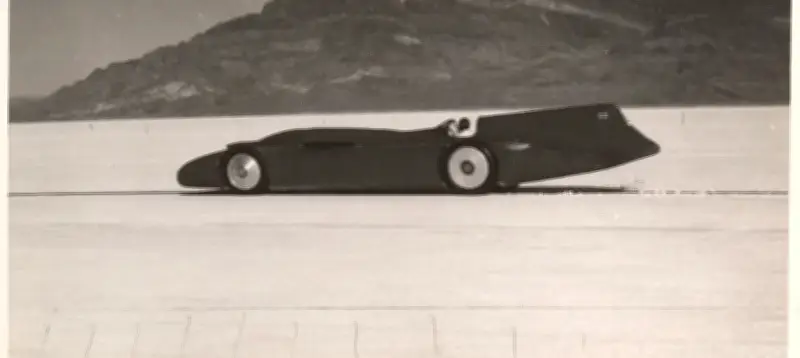
The interwar period saw a golden age of land speed records, with British drivers dominating. Kenelm Lee Guinness took the record in a Sunbeam 350HP, followed by Malcolm Campbell, who became a household name. Campbell, along with fellow Britons George Eyston and John Cobb, engaged in a frenetic contest in the 1930s, raising the record from 231mph at the decade's start to 367mph by its close.
The archive captures the era's drama, including photos of Cobb's Railton Special and Campbell's 1935 attempts at Bonneville, where he broke the 300mph mark. A handwritten note on one photo reads "early morning – clothes not yet removed". Campbell later recalled a terrifying moment during his record run: "Suddenly a film of oil started to cover the windscreen and deadly fumes from the engine commenced to enter the cockpit and I realised that at any moment I might fade out. However, we were fast approaching the end of the mile when there was a terrific explosion. The near-side front tyre had burst."
Postwar Evolution
After the second world war, the competition continued, with records set for endurance as well as outright speed. In 1959, an Austin-Healey Sprite set a 12-hour record covering 1,665 miles at an average speed of 138.75mph, with a laconic note recording a spin by driver Gus Ehrman: "Car spun outside measured line in 5th lap – run continued".
The 1960s brought a drastic change as jet and rocket power replaced wheels. Donald Campbell was the last to hold the wheel-driven record at 403.10mph in 1964, before the FIA allowed thrust power. Craig Breedlove and Art Arfons then traded records, with Breedlove reaching 600.601mph in November 1965 in Spirit of America. The archive includes a telegram from Breedlove confirming the record and noting his car had four wheels this time.
Modern Legacy
This week, Andy Green drove the JCB Hydromax to a hydrogen-powered FIA land speed record of 406.320mph at Bonneville, continuing the legacy. Green, who holds the overall land speed record of 763.035mph set in 1997 in ThrustSSC, is the only person to have broken the sound barrier on land. Banowetz observed: "The people that do this sport are admired because it's unique in so much as if you can dream it, you can build it and you can race it."