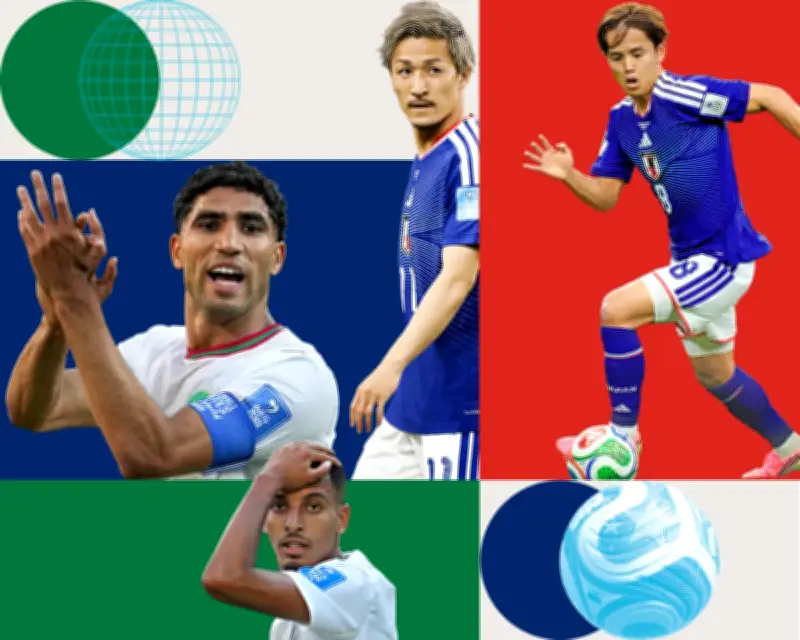
Japan and Morocco face old order giants in the World Cup last 32, offering hope of a winner from outside traditional powers. Two eye-catching ties on Monday pit Japan against Brazil and Morocco against the Netherlands, with the potential to disrupt the usual dominance of European and South American teams.
World Cup's Perpetual Flux
The World Cup has expanded to new territories, experimented with formats, but still one of the same eight countries from western Europe or South America wins it. Since Argentina in 1978, only France and Spain have been new winners, both from the heart of Uefa, benefiting from wealth and industrialised youth production.
Yet the old world seems increasingly at odds with FIFA's leadership. Gianni Infantino portrays himself as a champion of the global south, sustained by voters from Africa, Asia, and Latin America, much like his predecessors Sepp Blatter and João Havelange. Despite controversies over migrant workers in Qatar and denied entries to the USA and Canada, Infantino remains popular among delegates who receive salaries and expenses.
Infantino vs Uefa
The expanded Club World Cup provides revenue to western European superclubs but represents Infantino's ongoing power struggle with Uefa. Under Aleksander Ceferin, Uefa has limited itself to trolling: freezing ticket prices for Euro 2028, appointing Omar Artan to referee the Super Cup final, and insisting hydration breaks will not be mandatory in Uefa competitions. FIFA continues to grow, sustained by the very regions most negatively impacted by its policies.
Japan and Morocco: Different Routes
Japan and Morocco impressed in the buildup and maintained form in the group stage, but reached the last 32 via different routes. Morocco, in 1986, became the first African side to reach a World Cup knockout stage, and in Qatar 2022, the first to reach a semi-final. Their squad benefits from diaspora: 19 of 26 players were born outside Morocco, including three in the Netherlands, with many trained in top European academies.
Morocco also funds its own development through the Mohammed VI football academy, which provided four players for the 2022 squad. While midfielder Azzedine Ounahi is the only alumnus in this squad, the programme has expanded to four more cities, promising greater opportunities for aspiring Moroccan footballers.
Japan's J League, established in 1992, has been a huge success. Only three of the current squad still play in Japan, but players are developed at home. Major European clubs now readily sign from the J League. Under Hajime Moriyasu, Japan has a discernible style: organised pressing, neat technical possession, exemplified by Daizen Maeda's goal against Sweden.
Key Matchups
Morocco must find a way to deal with Brian Brobbey's power or stop supply to him; the clash between Achraf Hakimi and Cody Gakpo looks vital. Japan have never won a World Cup knockout game, but their 2-0 comeback win over Brazil in a Tokyo friendly in October may boost confidence. Carlo Ancelotti's Brazil occupies a weird space: obviously flawed yet blessed with high-class individuals like Vinícius Júnior. Japan could dominate midfield, and Takefusa Kubo may return from a knee injury to add creative edge.
These two games are extremely competitive. Brazil and the Netherlands could win, ending the hopes of outsiders. But the fascination with these matchups is telling: if a new world is coming, it will be born on the pitch through links with the European system, not Infantino's machinations.