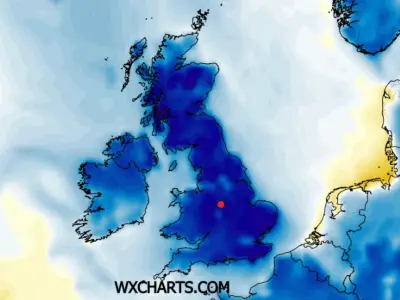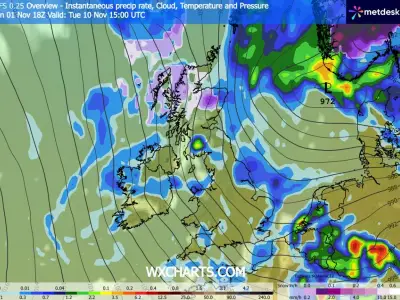
The UK could face a spell of colder weather as an unusually early disruption to the polar vortex raises uncertainty about the months ahead. The polar vortex, a powerful circulation of winds that normally forms above the Arctic each autumn, has weakened and shifted position in recent days, with forecasts suggesting the winds could even reverse direction by the middle of November.
Record-Early Disruption
According to scientists, the timing of this disruption is highly unusual. Most major disruptions, known as sudden stratospheric warming (SSW) events, happen later in winter. Jeff Knight, lead climate scientist at the Met Office, told the BBC: "It would appear to be the earliest on record looking back over the 75 years we've been observing…with most experts agreeing this is a very unusual event."
A weakened polar vortex can affect the jet stream, a core of strong winds blowing from west to east, making it more likely that Arctic air will move south towards Europe. This can increase the chances of colder conditions and snow, mostly in the eastern parts of the UK.
Forecasters Warn of Uncertainty
However, forecasters have warned that snow is far from guaranteed. Professor Andrew Charlton-Perez, a meteorologist at the University of Reading, said: "The typical response to a SSW is for colder and drier conditions over Europe and the UK." He added that the unusual timing makes it harder to predict what will happen next.
The disruption is taking place as an exceptionally strong El Niño influences global weather patterns. This climate phenomenon can contribute to disturbances in the atmosphere, although scientists say there is not enough evidence to establish a clear link with such an early polar vortex disruption.
Drought Concerns
The Met Office's long-range outlook had previously suggested a stormier start to winter, potentially followed by colder and drier weather from January. Experts say the bigger concern could be a lack of rainfall. Much of England and Wales remains in drought, and a drier winter could make it harder for reservoirs to recover.
For now, it is too early to say whether the unusual polar vortex behaviour will bring a significant cold spell or snow to the UK.