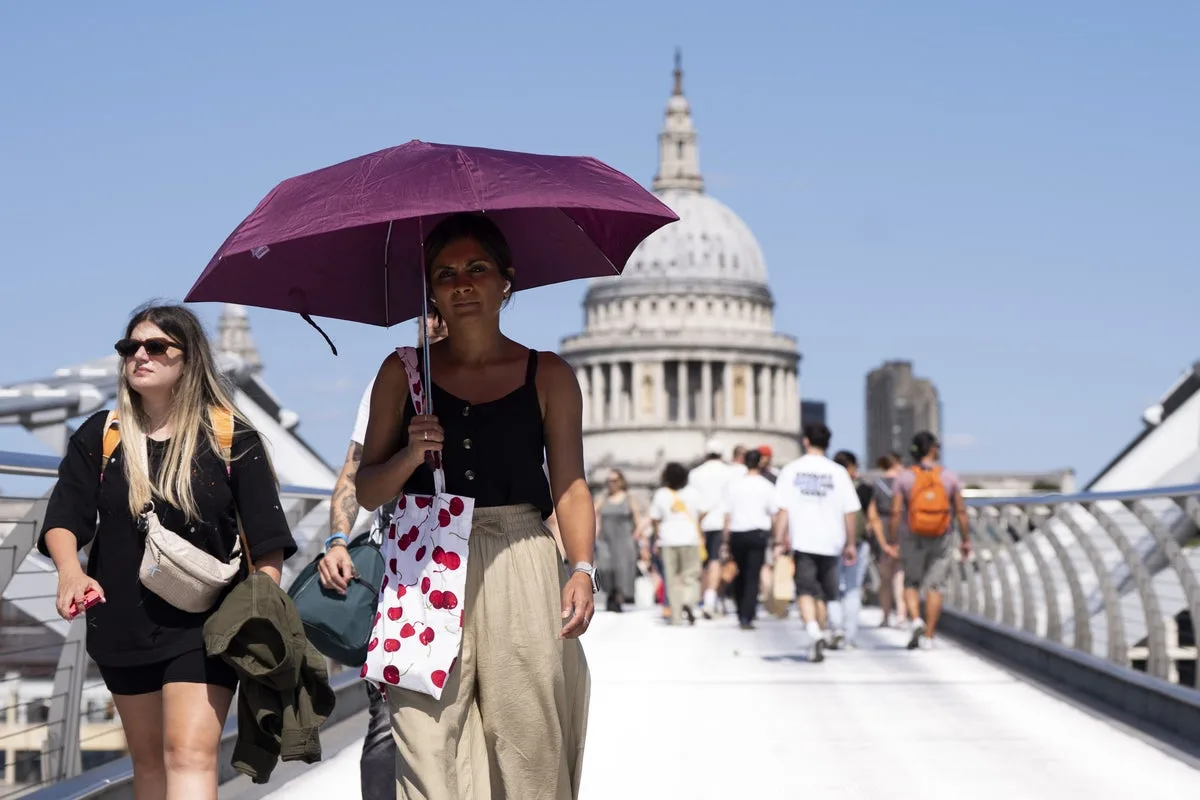
Britain is braced for an 'exceptional' heatwave with temperatures set to hit 33C on the hottest May bank holiday ever. The UK Health Security Agency has activated a six-day heat health alert for southern, eastern and central areas of England from Friday until next Wednesday.
This alert – the first of 2026 - warns the public of an 'increased use of healthcare services by vulnerable people' and a 'greater risk to life of vulnerable people'. And Brits are set to sizzle in the bank holiday heat with forecasters predicting the hottest Spring temperatures ever recorded in the UK.
The mercury is expected to soar to a sweltering 30C on Saturday before reaching 32C the following day. Things will get even warmer at the start of next week with southern England and the Midlands predicted to bake in 33C temperatures, clearing the Spring and May record by 0.2C.
Temperatures in the capital will top 28C - the heatwave threshold - for at least five days in a row from Friday until next Tuesday. Indeed, Friday will be the UK's hottest day of the year so far – beating the existing 2026 record from more than 40 days ago of 26.6C at Kew Gardens in London on April 8.
Sunseekers enjoy the high temperatures in Wallington, Oxfordshire on Thursday ahead of the year's first heatwave. A woman walks her dogs in Wallington as Brits get ready for temperatures of 33C this weekend. Things will be warmest at the start of next week with southern England and the Midlands predicted to bake in 33C temperatures.
But this figure is likely to be topped throughout the weekend as Brits head to beaches and parks across the country to soak up the sunshine. Tuesday is unlikely to spell the end of the hot snap, however, with temperatures expected to remain high throughout the rest of the week.
The extreme weather is being prompted by a wave of high pressure hitting the UK, introducing more settled conditions and clearer skies after heavy cloud cover in recent weeks. Read More UK braces for first heatwave of the year: Temperatures to hit 31C as heat health alert is issued. The only areas shielded from the soaring temperatures will be parts of western Scotland and Northern Ireland, where it will be cooler and more overcast than elsewhere.
Met Office Deputy Chief Forecaster, Steve Kocher, said: 'It is likely that the May and Spring UK temperature records will be broken over the Bank Holiday weekend, with forecast temperatures surpassing the existing record of 32.8°C. As well as it being hot, there will be lots of dry and sunny weather for much of the UK. There will however be more cloud and some showers in Northern Ireland and western Scotland through the weekend. With relatively low sea surface temperatures there is also likely to be some low cloud and sea fog clinging closely to western coasts.'
The Met Office is urging those heading to the beach to check forecasts and be mindful that sea temperatures remain low - at around nine to 13C. Heatwaves are expected to first be recorded in the south east of England, before the centre and west of the country, as well as Wales, catch up later next week.
Dafydd Beech, National Community Education Manager at the British Red Cross, said: 'As we come into the summer months, warm weather gives us a chance to get out a bit more and enjoy ourselves. It's important to take care while you have fun with friends and family to avoid becoming dehydrated, getting sun burn or even heat stroke. Getting into the habit of taking steps whenever temperatures rise can really help. It can be simple things like wearing sunscreen, drinking plenty of fluids or ensuring you take breaks from the sun. Building these habits early means people are better prepared if hotter weather lasts longer.'
Ahead of the spell of hot weather, Alzheimer's Society has issued advice on how to support people living with dementia as temperatures rise. In particular it is important to prevent dehydration with the charity advising people to 'leave beakers or jugs of water within easy reach'; 'use clear or brightly coloured beakers'; 'share a drink together'; 'leave prompts and reminders'; and 'provide high water content foods'.
Expected journeys over the bank holiday weekend based on AA survey: Friday, May 22 - 68% of drivers travelling, 23.4 million journeys; Saturday, May 23 - 66%, 22.8 million; Sunday, May 24 - 65%, 22.4 million; Monday, May 25 - 65%, 22.4 million.
Angelo Makri, senior knowledge officer for wellbeing at Alzheimer's Society, said: 'People should absolutely enjoy the nice weather we're having, however, it's important to note that high temperatures can lead to severe health problems for people with dementia unless they take precautions to keep cool and well hydrated.' Similarly, the British Heart Foundation said heart patients also face potential dangers in the heat and should take extra precautions to minimise health risks.
Ruth Goss, senior cardiac nurse at the foundation, said: 'In hot weather, check on your friends and relatives regularly to make sure they are cool and comfortable. The most important way you can protect your heart in the heat is to stay cool and keep hydrated.'
Hotter conditions often lead to a surge in ambulance call-outs and Royal National Life Boat Institution (RNLI) rescues along UK coastlines as people experience heat stress or get into trouble in the water. The AA is predicting a congested bank holiday weekend on the roads because of the warm weather - with Friday set to be the busiest day with 23.4 million journeys.
Holly Clements, Met Office head of warnings and guidance, said: 'Warm weather on a bank holiday draws people outside, but the weather at the coast can change quickly, and conditions like tides, waves and wind can all affect safety at the beach. Sun protection is particularly important here as reflective surfaces like sand and water amplify UV radiation that can damage skin and eyes, even when it's cloudy. By checking the forecast and following simple safety advice, people can reduce the risks and make the most of their time by the sea.'
The RNLI said choosing a lifeguarded beach, swimming between the red and yellow flags, and educating themselves on what to do in an emergency can make all the difference in staying safe on the coast. Last year, the organisation helped to save more than 36,000 people across UK beaches, which was more than double compared with the previous year.
Samantha Hughes, RNLI water safety partner, said: 'If you find yourself in difficulty in the water, try to remain calm and remember Float to Live: lean back with your ears submerged, extend your arms and legs, and float until you can control your breathing and wait for help to arrive or before moving to safety. If you see someone else in trouble in the water, phone 999 or 112 and ask for the coastguard.'
The public is also being urged to check the water quality before entering rivers, lakes or coastal waters ahead of the bank holiday weekend, after the official bathing season began last week. Between May and September, 464 sites across England's coasts, rivers and lakes are subject to regular water quality testing by the Environment Agency. A UK heatwave is official when a location records at least three consecutive days of daily maximum temperatures which meet or exceed a specified threshold - which varies by region.
Poor water quality caused by sewage spills and pollution in many of the country's waterways can put people's health at risk with illnesses such as E.coli or norovirus, as well as skin, eye and ear infections. River Action said swimmers, paddlers, rowers and bathers can check for recent sewage spills or water quality alerts near designated bathing sites through tools such as sewagemap.co.uk or Surfers Against Sewage's 'safer seas and rivers service'. The group also encourages people to refer to practical guidance developed in partnership with British Rowing and The Rivers Trust on reducing health risks and staying safe when water quality is poor.
Reasons for travel over the bank holiday weekend based on AA survey: Shopping 40%, Visiting family or friends 39%, DIY or garden centre 23%, Work 22%, Daytrip to other attractions 11%, Daytrip to the coast 8%, Holiday in the UK 7%, Long weekend away 7%, Sports event 6%, Road trip 5%, Holiday in Europe 2%, Music festival 1%, Theme park 1%.
James Wallace, River Action chief executive, said: 'In general, dry weather can mean lower pollution risk, but people should still take care, avoid swallowing water, and avoid swimming with open cuts or wounds.'
Cllr Dr Wendy Taylor, chair of the Local Government Association's Health and Wellbeing Committee, said: 'With a heatwave expected to cover large swathes of the country this weekend, people in affected areas can help to identify those who may need advice or practical help during the high temperatures. Look out for those who are more vulnerable – older people, young children, babies, and those with underlying health conditions. Hot weather advice applies to everyone, not just those who are vulnerable. It may feel like common sense, but we can all take sensible precautions during the high temperatures.'
It comes after climate advisers said Britain must get used to being a 'hot country' and data revealed the risk of extreme heat will increase by 300 per cent by 2050. May has been colder than average for many areas so far after temperatures dropped in the first few weeks of the month.
The heat health alert covers the East Midlands, East of England, London, West Midlands and the South East from 9am this Friday until 5pm next Wednesday. Research by the motoring organisation, based on 12,225 responses from its members, suggests the getaway will be spread across the whole long weekend, with around two-thirds of drivers expecting to travel each day.
Friday is expected to be the busiest day with around 23.4 million journeys, 22.8 million on Saturday, and 22.4 million on both Sunday and bank holiday Monday. Most Bank Holiday journeys are expected to be local or regional, with 53 to 55 per cent of drivers planning trips of up to 50 miles each day.
Shopping is the most common reason for travelling, cited by 40 per cent of drivers, closely followed by visiting family or friends at 39 per cent. Almost a quarter are planning DIY or garden centre trips (23 per cent), while 22 per cent expect to travel for work. Leisure traffic will also add to the risk of potential congestion, with 11 per cent planning a day trip to attractions, 8 per cent heading to the coast, 7 per cent taking a UK holiday and 7 per cent going away for a long weekend.
Likely hotspots include local routes around shopping centres, retail parks and garden centres; roads serving popular seaside towns, national parks, ports and airports; and roads heading towards the east coast, including routes to resorts such as Skegness. Routes towards the South West and Cornwall, including the A303, M5 and A38, are also set to be busy – as is the M4 from London and routes leading towards Wales; and the M6 towards Blackpool and the North West coast.
Sunday may also bring extra pressure around major football grounds and surrounding roads, with the final round of Premier League fixtures taking place across England from 4pm. Meanwhile, the Government has been urged by advisers to set maximum temperature rules for workplaces and roll out air conditioning in hospitals and care homes to protect Britons against worsening climate change.
The extreme weather is being prompted by a wave of high pressure hitting the UK. The Met Office is urging those heading to the beach to be mindful sea temperatures remain low. Ministers should even consider changing the school year so pupils are not forced to sit important national exams in summer heat, when they may not have been able to sleep properly and are 'absolutely not at their best', the Climate Change Committee's (CCC) Baroness Brown said.
The committee warns that worsening extremes of heat, flooding and drought are threatening the British way of life, from lives and livelihoods to the NHS, 'gently changing seasons', children's football games, music festivals and weekend visits to National Trust venues. Successive governments have not done enough to help the country adapt to the changing climate, a new report from the committee said, as it set out a series of solutions and targets for mid-century to hold the line against the threats.
And while efforts to cut climate emissions have become politically polarised, Baroness Brown said high numbers of voters across all parties thought the UK was unprepared for the changing climate, and 'we might hopefully avoid that really extreme political division' when it comes to adaptation. Gavin Scarr-Hall, health and safety director at HR firm Peninsula, said: 'Creating a comfortable working environment is both a legal and moral obligation and it's true that working in a hot environment can be detrimental to both health and business. But there are already many controls that employers can put in place to regulate office temperature to ensure they're meeting their duty of care to employees.'