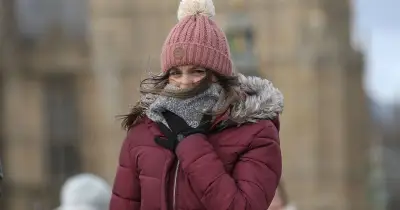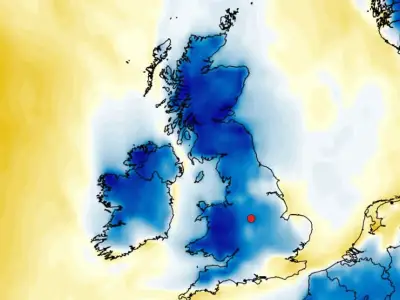
The Met Office has issued its verdict on whether it will snow in parts of the UK this week, as cold air moves south across the country. A brisk northerly wind is making conditions feel particularly chilly, with the lowest temperatures likely to hit rural areas in the north-west and south of England, as well as southern Scotland, south-west and central Wales and the Midlands.
However, cold weather does not guarantee snow. Snow requires both cold air and moisture, which is not easy to achieve in the UK. For Liverpool and the surrounding Merseyside area, proximity to the Irish Sea prevents much snowfall. Snow forms when air temperatures are close to the 0C to 2C range. For Liverpool, the Irish Sea acts as a thermal buffer, keeping local air and ground temperatures relatively mild and turning potential snow into rain before it can land and settle.
Snow Risk Focused on Northern Scotland
This weekend's snow risk is focused on Northern Scotland, where frequent wintry showers will affect the area, making it blustery. For the north west of England, the Met Office predicts Thursday evening's weather as: "A dry night ahead with plenty of clear spells."
It said: "Temperatures will fall sharply overnight, beneath long clear spells as winds ease. A widespread frost is expected, particularly in sheltered valleys. Minimum temperature -4C."
Looking to Friday November 13, it is expected to be: "A frosty, sunny morning, then becoming increasingly cloudy with a few scattered showers during the afternoon. Feeling chilly, though only a light breeze. Maximum temperature 7C."
UKHSA Issues First Cold-Health Alert
Ahead of the weekend, the UK Health Security Agency (UKHSA) has issued its first yellow cold health alert of the season. The alert covers the North West and the West Midlands from 9am on Thursday (12 November) until noon on Saturday.
The warning reminds people that a drop in temperature could lead to increased demand on healthcare services and pose a greater risk to life for vulnerable people. Other regions of England are currently unaffected.
Dr Anya Gopfert, consultant in public health at UKHSA, said: "This is the first cold-health alert of the winter, but we can expect more as we move further into the season."
She added: "Cold weather can have a serious impact on the health of some people, including those aged 65 and over and those with pre-existing health conditions, so it is vital to check in on friends, family and neighbours who are most vulnerable."