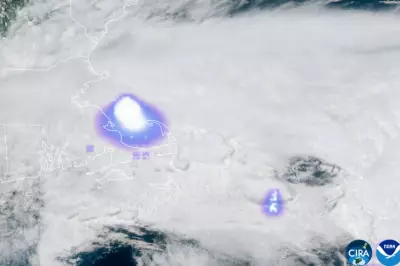
A meteor as heavy as an elephant caused widespread speculation across New England after a double boom shook homes and sent pets fleeing over the weekend. NASA initially confirmed the cause on Saturday, but on Monday, the agency released stunning new details about the fiery object.
Meteor's Size and Speed
The fireball measured 5 feet (1.52 meters) in diameter and weighed as much as an elephant, according to NASA. It was traveling at an astonishing 42,000 mph (67,592.5 kph) when it entered Earth's atmosphere. The meteor broke up miles above New England on Saturday, releasing energy equivalent to about 230 tons of TNT, which accounted for the loud booms heard across the region.
Composition and Trajectory
NASA confirmed the meteor was made of natural material, ruling out satellite or space debris. It traveled through the atmosphere for approximately 26 miles (41.8 kilometers) before falling into Cape Cod Bay, located off the coast of southeastern Massachusetts.

While meteors are common, NASA noted that they often occur over oceans or unpopulated areas, making them difficult to spot. This one, however, had a large audience due to its dramatic effects.
Public Reaction and Speculation
The rattling boom prompted widespread speculation on social media. Residents in Massachusetts and Rhode Island initially thought it was an earthquake or a fallen tree. Some reported their dogs were freaking out, and at least one person jokingly suggested aliens. A man in Peabody, Massachusetts, thought a large tree had hit his house, only to find neighbors with the same questions.
Several people filed reports with the U.S. Geological Survey, registering the shaking they felt with the National Earthquake Information Center. The agency opened an event page based on online reports, but no seismic activity was registered on seismographs, confirming it was not an earthquake.
The American Meteor Society received dozens of reports from Delaware to Montreal, with people hearing the double boom, feeling the ground shake, or seeing the fireball. Robert Lunsford, the society's program monitor, noted the widespread nature of the sightings.