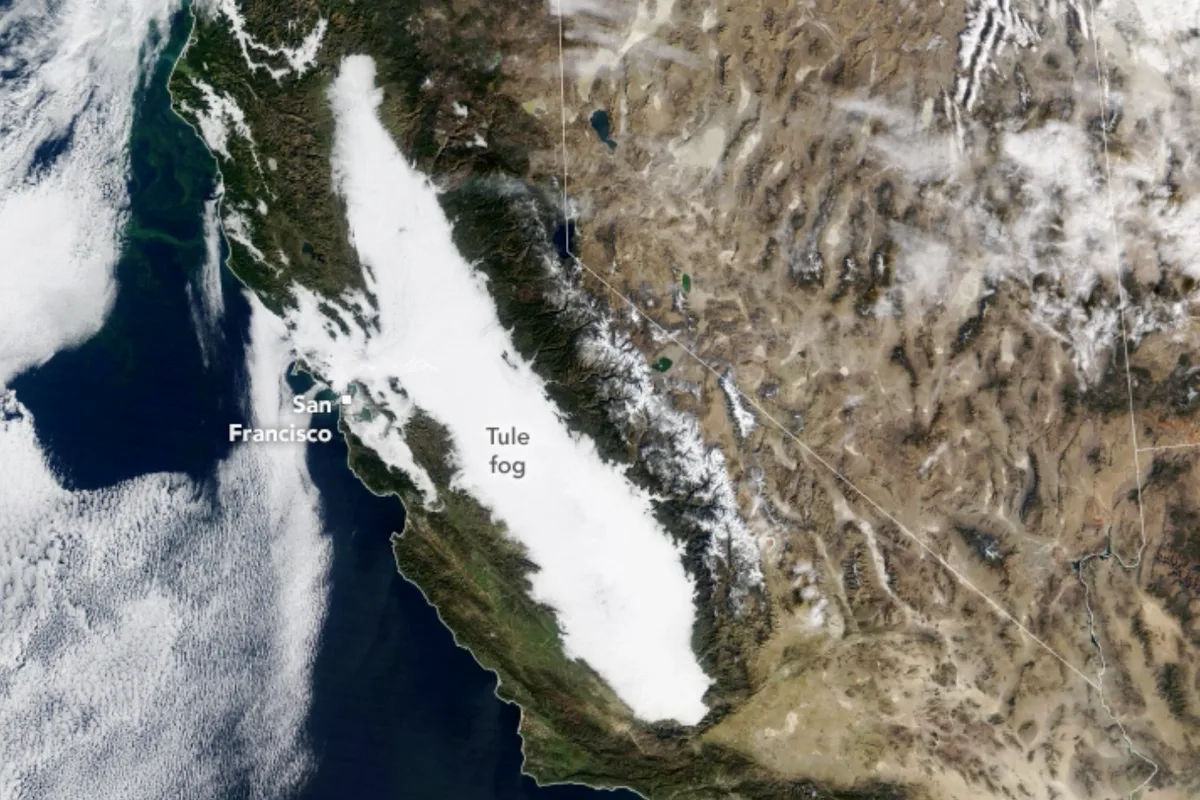
A dense and persistent cloud of 'radiation fog' has enveloped California's Central Valley for several days, prompting urgent travel warnings and air quality alerts affecting an estimated 13 million people.
What is Radiation Fog and Where Has it Struck?
The phenomenon, which is unrelated to nuclear radiation, has impacted more than 20 counties across a 400-mile stretch of the state. It forms when the ground cools rapidly after sunset, releasing heat and creating thick, low-lying fog. Major urban areas including Sacramento, Fresno, Bakersfield, Oakland, and Stockton have been among the worst affected, with over two million residents in these cities directly impacted in the last week alone.
The National Weather Service (NWS) has been issuing alerts since last week, classifying the dense blanket as a 'high transportation risk' and reaching Level 4, its highest grade for motorist safety. The fog, also known locally as 'Tule fog', is an annual occurrence in the late fall and winter, typically appearing in November, peaking from December to February, and fading by March.
Dangerous Consequences: From Pile-ups to Polluted Air
While not directly harmful to health, the fog creates extreme hazards by reducing driver visibility to near zero. It has a tragic history of causing massive multi-vehicle collisions.
One of the worst incidents occurred on November 3, 2007, involving 108 vehicles on Highway 99 south of Fresno. The crash killed two people, injured over 40, and closed the highway for more than 12 hours. More recently, a 40-car pileup on January 6 this year resulted in two further fatalities and nine injuries.
Perhaps the more insidious threat is to air quality. The fog acts like a lid, trapping toxic particles from car exhausts, factory fumes, and agricultural dust close to the ground where people breathe. This trapped pollution, particularly tiny PM2.5 particles, can exacerbate respiratory problems like asthma, leading to increased hospital admissions, especially among children and the elderly.
A Changing Phenomenon and Future Outlook
Interestingly, research from the University of California, Berkeley in 2019 suggests that stricter clean-air regulations have reduced the number of thick Tule fog days compared to 30-40 years ago. Study author Ellyn Gray explained that fog needs pollution particles to form water droplets, and cleaner air means less fog.
However, when it does form, it remains a significant public health and safety issue. The World Health Organization identifies such trapped air pollution as a major cause of early death worldwide. For now, residents in the Central Valley, Sacramento Valley, and Bay Area must contend with the dual threats of treacherous roads and choked air until the sun burns the fog away each day.