California Avalanche Tragedy Highlights Perilous Backcountry Risks
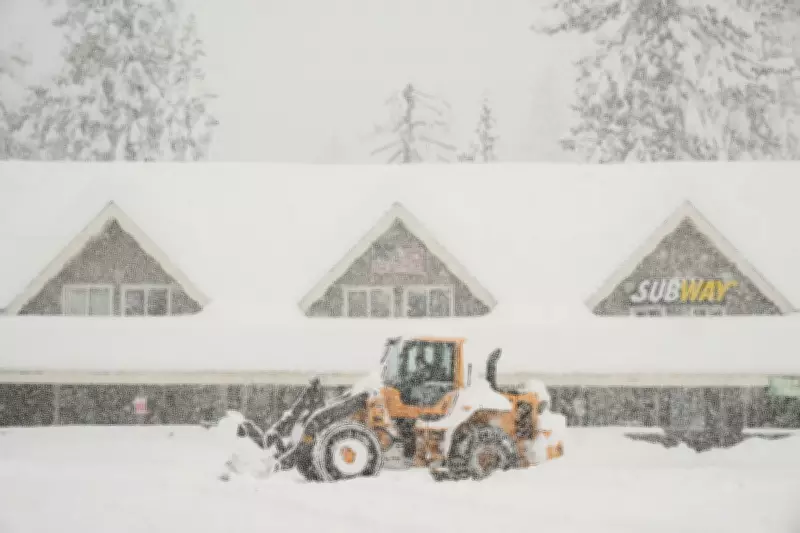
The recovery operation for skiers killed in the deadliest United States avalanche in almost forty-five years is being prolonged due to what experts identify as a fundamental principle for rescuers: avoid becoming victims yourself. A persistent storm continued to batter California's remote Sierra Nevada wilderness on Thursday, raising concerns about further avalanches in the backcountry area where authorities confirmed eight fatalities and one person remains missing two days after their group was engulfed by the deadly slide. Six individuals survived the incident.
Rescuers Face Same Dangers as Victims
Rescue teams confronted the identical potential hazards that claimed the lives of the backcountry skiers and professional guides, as they engaged in a pursuit with inherent risks exacerbated by several feet of fresh snowfall. Recovery efforts were scheduled to recommence on Friday. The group of fifteen skiers caught in Tuesday's avalanche were on the final day of a multi-day excursion and were making their way toward the trailhead as snow from the ongoing storm system accumulated in the Sierras.
"It was, quite likely, very necessary for them to leave the backcountry so their hazard wasn't increased further," explained Anthony Pavlantos of Utah-based Prival USA, a manufacturer of avalanche safety equipment and operator of mountain safety programs. "What's really hard to say is like 'why were they moving?' You can't ever start placing blame on events like this because we can all be there."

Avalanche Forecasts and Unpredictable Conditions
Backcountry winter enthusiasts, ranging from skiers and snowboarders to snowmobilers and mountaineers, rely heavily on avalanche forecasts to assess danger levels. However, turbulent mountain weather can cause conditions to change rapidly. To supplement forecasts or when none are available, experienced skiers and guides often dig a snow pit to test stability. They may also seek out less hazardous terrain, such as gentler slopes or areas shielded from known avalanche paths.
It is not unusual for individuals to venture into the backcountry during periods of elevated danger, as dangerous storms often bring the fresh snow that many skiers desire. Because fatal accidents are infrequent, risk-takers frequently survive, noted Dale Atkins, who has been involved in mountain rescues, avalanche forecasting, and research in Colorado for five decades.
"It's not about not going; it's about where and when you go," Atkins emphasized. Yet he added that emerging unscathed from the backcountry can foster a false sense of security in an activity where luck—or the lack thereof—also plays a critical role. "It's really easy to be fooled by the snow and avalanches. We keep going out even in the worst of storms because that's what we did last time, and then our luck runs out."
Survival Odds and Rescue Challenges
Typically, the best chance for someone buried in an avalanche is to dig themselves out or be rescued by a companion, since slides often occur in remote locations. It took rescuers six hours to reach the victims of Tuesday's avalanche after the initial report. In contrast, the survival probability for someone buried for an hour is only about one in ten, according to Atkins.
The surviving skiers in California located three of the victims while awaiting rescue. Authorities have not provided a detailed account of how the other victims were found. A debris field from a major avalanche like the fatal one in California can cover an extensive area, complicating efforts to determine where someone ends up if caught and dragged beneath the surface.
Search Techniques and Time Sensitivity
The first step in a search is to look for clues such as a glove or ski pole that might indicate a victim's location, stated Anthony Stevens, chief adviser for the search and rescue team in Teton County, Wyoming, home to Grand Teton National Park. Skiers in guided groups usually carry transceivers, known as avalanche beacons, which emit signals showing their position. These devices can also receive signals, displaying the direction and approximate distance to a victim.

If that method fails, rescuers can form a line and use long, slender poles to probe the snow in hopes of finding someone, said Ethan Greene, director of the Colorado Avalanche Information Center. Time is of the essence throughout a rescue, and once someone is located, they must be excavated. The average burial depth is roughly one meter, or just over three feet, Atkins noted. Because snow and ice in an avalanche become heavily compacted, digging out someone from that depth requires moving at least a ton of material.
Survival after prolonged burial is rare. Atkins recalled two individuals who survived being buried for twenty-two and twenty-four hours respectively following an avalanche in the 1990s in Washington state. A third member of their party did not survive. "It's very unusual for a rescue team to find a buried person alive. But it happens, and that gives us hope," he concluded.