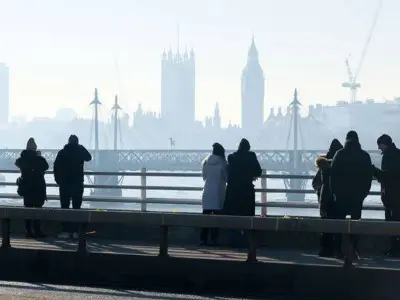
UK drivers are being urged to exercise extra caution as autumn fog returns, bringing potentially treacherous conditions to the morning commute. The Met Office has cautioned that mist and fog will become "important features as the week progresses," with night-time fog also anticipated as weather conditions become calmer and more settled. Fog dramatically reduces visibility, making it harder for motorists to judge speed, assess distance to the vehicle in front, or determine whether another car is moving or stationary.
Three-second rule change
Under normal dry road conditions, the standard guidance is to maintain a two-second gap behind the car in front. However, in foggy conditions, the AA advises drivers to increase that gap to a minimum of three seconds. Motorists are encouraged to reduce speed and travel only as fast as enables them to stop safely within the distance they can clearly see ahead.
Edmund King OBE, Director of the AA Charitable Trust, cautioned drivers against common pitfalls in murky weather. He said: "Fog can transform a familiar road in a matter of minutes, so drivers need to be prepared to adapt their speed and leave more room between themselves and the vehicle ahead. One of the biggest mistakes is simply following the rear lights of the car in front. It can give you a false sense of security and means you may be travelling too close to react safely if that vehicle suddenly stops."
Don't rely on automatic lights
Drivers are also urged not to place complete trust in modern vehicle technology when visibility deteriorates. The AA warns motorists against relying exclusively on automatic headlights, as many vehicle sensor systems fail to activate in foggy daylight conditions. Depending on daytime running lights is equally hazardous, as they often leave the back of the vehicle entirely unlit.
Instead, drivers should take manual control and activate their dipped headlights. Motorists also need to stay especially alert for road workers and roadside recovery teams, who become considerably more difficult to spot when visibility worsens. Mr King said: "Don't assume your automatic headlights have switched themselves on either. Take control, use dipped headlights and make sure you can both see and be seen."
When to use fog lights
While fog lights are vital when visibility is seriously compromised, understanding when to deactivate them is equally important. Leaving fog lights on when conditions clear can dazzle approaching motorists. Bright rear fog lights can also obscure brake lights, making it harder for drivers behind to notice when you are slowing down.
Because autumn fog tends to be patchy, motorists should be ready to turn fog lights on and off as conditions fluctuate during their journey. Mr King explained: "If visibility becomes seriously reduced, use your fog lights, but remember to switch them off again when conditions improve as they can dazzle other road users and obscure brake lights."
Navigating junctions safely
Junctions pose a particular danger when thick fog obscures approaching traffic. Drivers are advised to reduce speed significantly, take additional time to check the road carefully, and never pull out until they are entirely certain it is safe to proceed. At quieter junctions in heavy fog, winding down a window can assist motorists in listening out for the sound of approaching traffic they may not yet be able to spot. Road safety experts emphasise, however, that this is purely an additional precaution and should never substitute thorough visual checks.
Mr King added: "Ultimately, there's no prize for arriving a few minutes early. Give yourself extra time, slow down and drive to what you can actually see ahead."