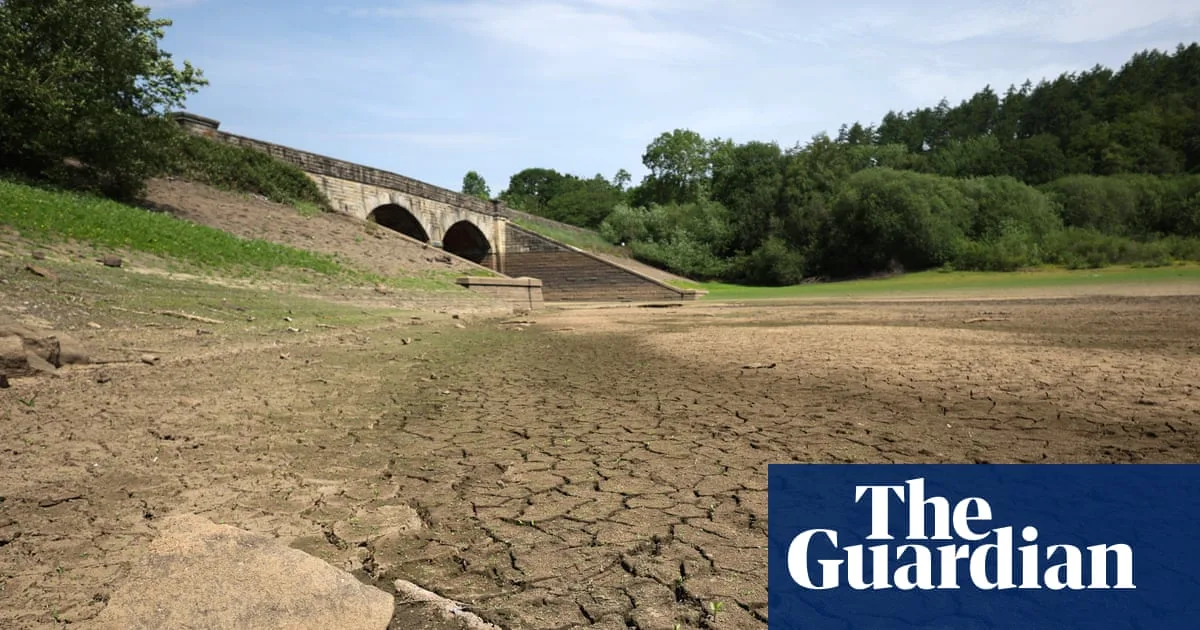
Four areas of England are now officially in drought, as the East and West Midlands join Yorkshire and the north-west in drought status. The government's national drought group met on Tuesday to discuss the response to prolonged dry weather, which has caused mass fish die-offs, low river flows, dangerous algal blooms, and crop failures.
Water minister Emma Hardy urged water companies to implement hosepipe bans to conserve water. 'I have asked the national drought group to step up its response to ensure we are successfully managing the impacts of ongoing dry weather,' she said. 'Water companies must now take action to follow their drought plans – I will hold them to account if they delay.'
England experienced its hottest June on record, with rainfall 20% below the long-term average. Reservoir levels have fallen to 75.6% capacity, below the 77% recorded during the severe drought of 2022. The Department for Environment, Food and Rural Affairs (Defra) warned that crop yields, especially non-irrigated grains and straw, are likely to be lower than last year.
Wildlife is also suffering, with wildfires, drying wetlands, and loss of breeding seasons for rare species. The national drought group is asking recreational water users to report environmental problems such as fish in distress. Environment Agency director Helen Wakeham said: 'This has been the driest start to the year since 1976, and we need to make sure our water supplies can sustain us through the summer.'