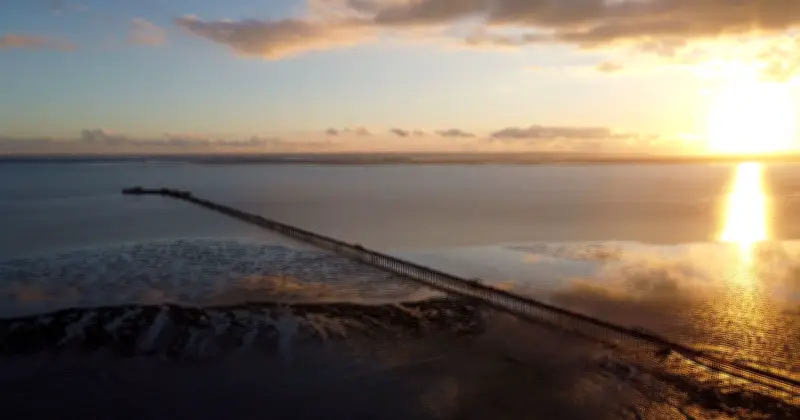
One of Britain's most iconic seaside landmarks, Southend Pier has survived disasters, wartime service, and four major fires during its nearly 200-year history. Stretching an astonishing 1.34 miles into the Thames Estuary, it is the longest pleasure pier in the world, designed for walking and entertainment. Yet on several occasions, it has come close to being lost forever.
A History of Resilience
Major fires struck the pier in 1959, 1976, 1995, and 2005. The most devastating blaze, in October 2005, destroyed much of the pier head, including shops, cafes, and historic buildings. Images of flames engulfing the structure made headlines around the world, but the landmark was eventually rebuilt and reopened.
The Birth of Southend Pier
The story of Southend Pier began in 1829 when work started on a wooden structure designed to solve a unique local problem. The waters around Southend are exceptionally shallow, meaning boats could not easily reach the shoreline at low tide. To allow steamships and passenger vessels to dock, a pier stretching far out into the estuary was required. When it opened in 1830, visitors paid a penny to walk along it, giving rise to the nickname "the penny pier."
Victorian Expansion
As Southend grew into one of Britain's most popular holiday destinations during the Victorian era, the pier expanded dramatically. The original wooden structure was eventually replaced by an iron pier, which opened in 1889 at a cost of £68,920—equivalent in purchasing power to about £10.8 million to £11.5 million today.
Unique Features
One of its most unusual features is its railway. Introduced in 1890, it became the first pier railway in Britain and remains one of the few operating pier railways left in the world. The train still carries visitors along the lengthy route to the pier head. The pier has also played a role in British military history. During both World Wars, it was used by the armed forces, while sections were closed to the public for defence purposes.
Cultural Significance
Over the years, it has attracted celebrities, television crews, and even royalty. Celebrity chef Jamie Oliver famously filmed parts of his Channel 4 series Jamie's Great Escape from a temporary restaurant built at the end of the pier. The landmark has appeared in countless television programmes, documentaries, and tourism campaigns, helping cement its place as one of the UK's most famous seaside attractions. Another little-known fact is that walking from one end to the other and back covers almost three miles—making a visit feel more like a coastal hike than a traditional stroll along a pier.
Modern Day
Today, Southend Pier welcomes hundreds of thousands of visitors each year and remains a defining symbol of the British seaside. Having survived fires, storms, and changing fortunes over nearly two centuries, it continues to stand as one of the country's most remarkable engineering and tourism landmarks.