The Met Office has shared its verdict on when the blood moon will be visible from the UK. Sky watchers across the country will be able to witness a partial lunar eclipse in the early hours of Friday morning.
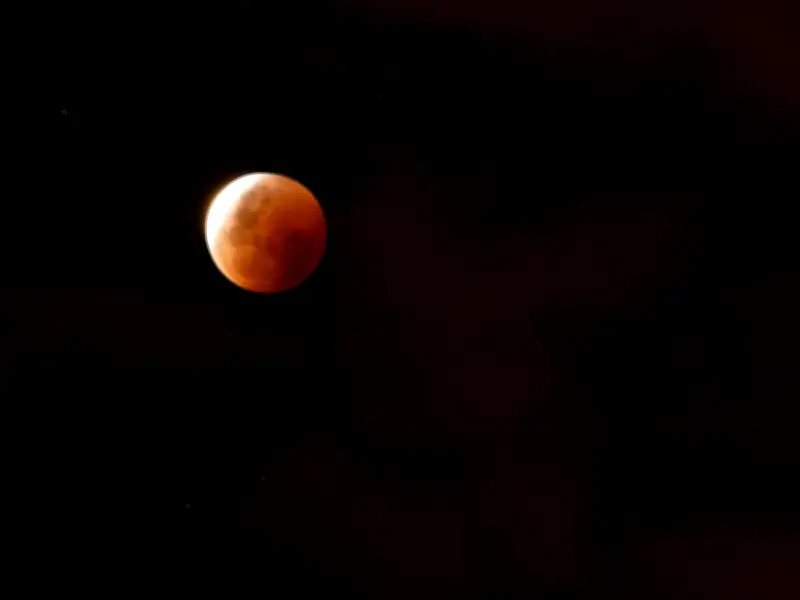
August has proved to be a spectacular month for astronomers, following the solar eclipse seen earlier this month. This week, people will have the chance to see a blood moon, also referred to as a lunar eclipse. This happens when the Earth moves directly between the Sun and the Moon, causing the Moon to take on a deep red colour.
Timings for the eclipse
Around 93% of the Moon will be in the darkest part of Earth's shadow at the eclipse's maximum. The spectacle begins around 2.20am on Friday, lasting until around 6.50am.

The Met Office said: "The eclipse will begin at 2.23am, when the Moon enters the penumbra, the lighter outer part of the Earth’s shadow. At first, the dimming will be subtle and may be difficult to notice with the naked eye."
"The more obvious partial phase begins at 3.33am, as the Moon moves into the umbra, the darkest part of the Earth’s shadow. From this point, observers may see a curved shadow gradually spreading across the lunar surface."
"Maximum eclipse will occur at 5.12am, when around 93% of the Moon will be immersed in the Earth’s darkest shadow. Although the partial phase continues until approximately 6.51am, the Moon will already have set across the UK by then."
Weather challenges and viewing advice
In London, moonset is expected at around 6.15am, with timings varying elsewhere.
The spectacle is technically referred to as a partial lunar eclipse. But the term "blood moon" refers to the reddish or copper colour that the eclipsed portion of the Moon may take on.
However, the UK forecaster said the weather may pose a challenge for some people hoping to see the eclipse. Thunderstorms and heavy rain are forecast over the coming days, which may make it difficult to see the spectacle to its full extent.
The best viewing opportunities are looking to be across southern and eastern England. According to the Met Office, these areas are expected to remain relatively cloud-free from around 2am, potentially allowing observers to see the opening stages of the eclipse.
Safety and viewing tips
Sharing advice on the best places to see the eclipse, the UK weather agency recommended hills, coastlines or any other open locations.
Advice said: "The Moon’s low position also means that even where there are gaps in the cloud, cloud close to the horizon could obscure the event."
"Unlike a solar eclipse, a lunar eclipse is safe to watch directly. No specialist eye protection is required, although binoculars may provide a more detailed view if skies are clear."