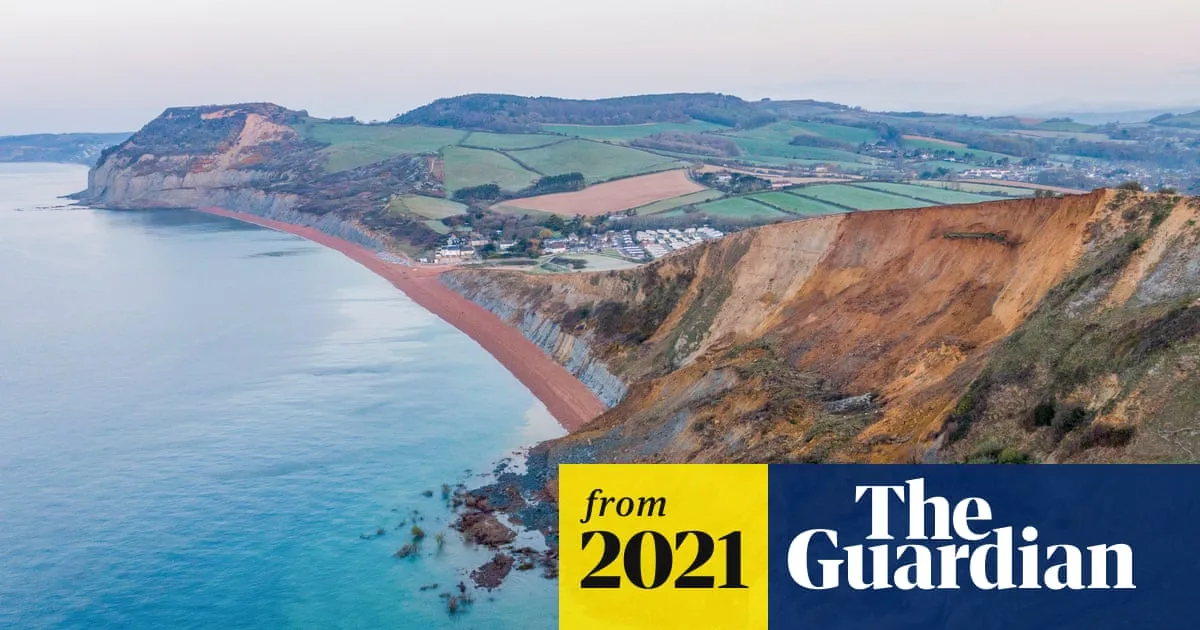
Dorset council has urged people to stay away from a beach after a massive rockfall on the Jurassic Coast, described as the biggest in the UK for 60 years. About 300 metres of cliff gave way, sending 4,000 tonnes of rock, some the size of cars, crashing onto the beach and into the sea west of Weymouth.
The council said more cliff was expected to be lost and cordoned off parts of the coastal path. A spokesperson warned: “Further movement is expected with fresh cracks affecting the fence line but not the coast path. We will monitor over the next few weeks to ensure that any further movement does not affect access.”
“Now the ground is drying out, there is the possibility of more slips and falls and they can happen very quickly. For your safety, keep clear of tops and bases of cliffs when out and about,” the spokesperson added.
Student geologist Jodie Brewin told the BBC the collapse was due to “re-weathering and erosion that basically falls hand in hand and shapes this coastline”. The rockfall occurred between Seatown and Eype beach, with another collapse reported just east of Seatown.
Southern England has seen a rise in cliff falls, including at the white cliffs of Dover in February. Dorset council reminded visitors that the Jurassic Coast is “an ever-changing landscape” and urged them to keep away from cliff tops and bases, and to stay off slip material on the beach.