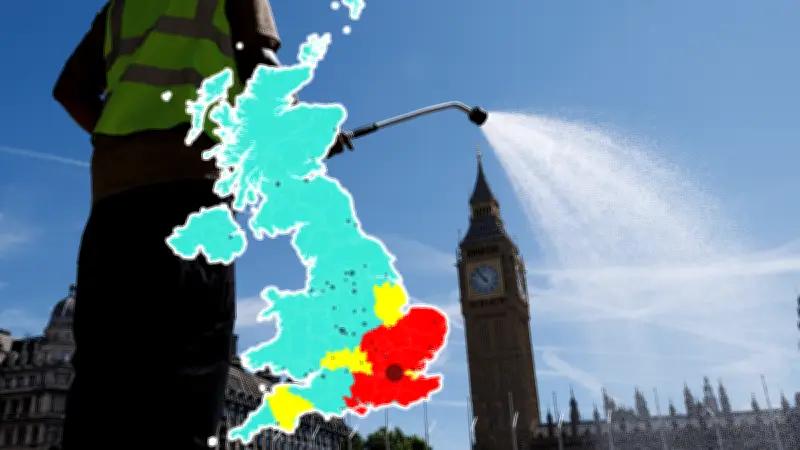
Millions of homes in London were hit with a hosepipe ban on Thursday as Thames Water became the latest company to impose restrictions. The new restrictions come as the hot weather continues to take its toll on the capital and the rest of the UK, with a fourth heatwave potentially on its way.
Despite cooler temperatures over the weekend, the relentless heat and lack of rainfall have prompted water companies to keep a close eye on resources. Thames Water joins several other firms that have already announced bans, including Affinity Water, which imposed a ban on some parts of London earlier this month.
Why the ban was introduced
In a statement on its website, the firm said it had announced a ban because of “prolonged dry weather and recent heatwaves, very low rainfall levels, higher than normal water demand, and forecasts for continued hot, dry weather.”“We’ve been working around the clock to maintain water supplies, but we now need everyone’s help to reduce non-essential water use,” the notice read.
The restrictions came into effect at 00.01am on Thursday. It means customers must not use hosepipes for any non-essential activities.
Weather conditions and drought concerns
South East England has seen its longest unbroken spell of no rainfall for more than 30 years, according to the Met Office. An average of zero rainfall has been measured across the organisation’s weather stations in the region for 17 days in a row, from July 2 to July 18.
Last week, temperatures met the 28C threshold for 12 consecutive days, before dropping off to around 24C over the weekend. However, with no sign of rain for at least another week, concerns continue to be raised about drought conditions and wildfire risks in the capital.
Thames Water statement
Nevil Muncaster, director of strategic water resources at Thames Water, said: “We would not be taking this step unless it was necessary to protect water supplies for everyone and the environment.“While there is enough water for essential use, we need to reduce non-essential outdoor demand to keep taps flowing.“Many customers have already reduced their water use and that support has made a difference. Thank you to everyone who has already changed their daily habits.”
Mr Muncaster added that Thames Water teams are working around the clock to keep water moving, fix leaks and support customers.“We will keep the situation under close review and lift restrictions as soon as it is safe to do so,” he added.
Other water companies with bans
The ban does not apply to waste-only customers or those supplied by another water company. South East Water was the first company to announce a ban on July 3, affecting customers in the Kent region. This includes places such as Maidstone, Sevenoaks, Tunbridge Wells and Canterbury.
Cambridge Water also issued a temporary ban for the first time in 30 years for parts of Cambridgeshire. Some 24 towns across Hampshire and the Isle of Wight will also become subject to a hosepipe ban announced by Southern Water while Anglian Water introduced its first hosepipe ban in a decade on Friday morning.
Restrictions are now in place for regions supplied by Anglian Water, including parts of Bedfordshire, Buckinghamshire, Cambridgeshire, Norfolk and Essex.
What the ban means for households
Under temporary hose pipe bans, households cannot use hosepipes for non-essential tasks. That means you can’t water your garden, fill up your paddling pool, or wash your car while the ban is in place. However, you can use hosepipes for the welfare of animals and pets. If you don’t follow the rules, you could face a fine of up to £1,000.