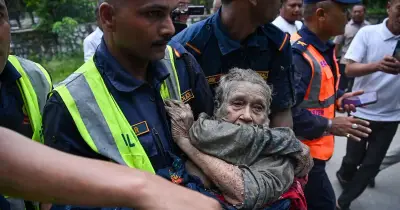
Officials in Nepal have said that 4,247 people are currently missing following the widespread flooding that began on August 26, an increase of more than 1,700 from the previous estimate of 2,502. At least 903 people have died. The total includes 3,655 Nepali citizens and 592 foreigners, among them 33 Brits whose loved ones have been able to contact them since the disaster.
Across the border in Tibet, the autonomous region administered by China, officials say 261 foreign nationals from 23 nations are missing, including 15 Brits, bringing the total across both nations to 48. According to Chinese authorities, the foreign nationals include 15 Brits, 104 Nepalis, 49 Indians, 33 people from Latvia and 18 Americans.
Rescue efforts for trapped hydropower workers
A significant portion of the overall number is made up of missing hydropower workers trapped in Nepal's hydroelectric network. A massive rescue effort has been launched to reach the approximately 933 workers who have been trapped in the tunnels for the last five days.

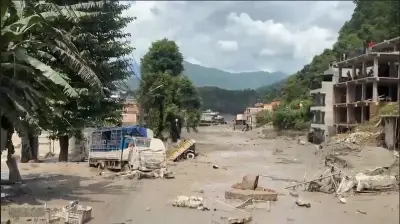
The missing workers are split across 11 hydropower projects in the nation, where riverside areas on which the network relies have been flattened by the powerful wall of water that rushed down the Himalayas. Foreign teams were assisting local rescuers at the Upper Trishuli-1 Hydropower Project, where they have been trying to find survivors while working through the rain.
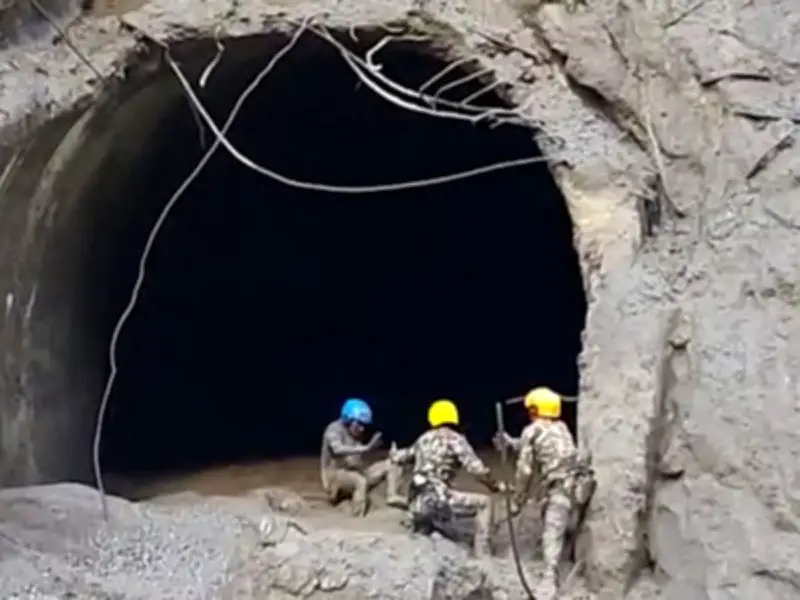
Brigadier General Raja Ram Basnet, Nepal's army spokesman, said the teams are "working in search and rescue of the stranded people from hills, settlements and river areas". Footage from the scene shows workers, many coated in the grey muck brought down the mountain by the flash floods, using heavy-duty equipment to shift the earth above the tunnels.
Debris hampers tunnel access
Many of the tunnels can be seen almost entirely clogged by debris. Brigadier General Basnet said debris has been the teams' main obstacle. He said: "A large amount of debris has been deposited and that is posing us a big challenge to open the tunnels."
Among the rescuers was Ashish Gurung, a guide who said people participating in the effort were finding it "difficult to move". He told The Guardian: "There is just mud everywhere. Inside the tunnel it was worse. It's so difficult to move, the mud is so deep."
He said his team had been trying to access Chilime Hydropower, with some mountaineers using planks of wood to gauge the depth of the mud surrounding the tunnels before converting them into makeshift bridges. They have been using a rope system to ensure they stay safe while carrying out their already difficult task.
Speaking of the complex job, he said: "Walking in it is very difficult; at one point it was up to our chests. We got close to the first station, about 130 metres in. Inside that far, you could [see further in]; it looked like it was just bodies."
Families losing hope
Approximately 21,000 people have joined the rescue efforts in Nepal, and officials are working hard to recover the missing workers, but families are quickly losing hope. Sita Pandey, whose husband is believed to be trapped inside a hydropower tunnel at the Trishuli-3A site after the flooding broke out, said her hopes are growing thinner by the hour.
She told Kantipur, a Nepali outlet: "I still have a 50% hope that he is alive because there is an oxygen system inside. But with every hour that passes, that hope becomes thinner." Jiban Khadka told the same outlet they were becoming similarly concerned.
They said: "The longer it takes, the more our hope dies. This operation must move much faster because every second is meaningful to us. It's a frustratingly slow operation."