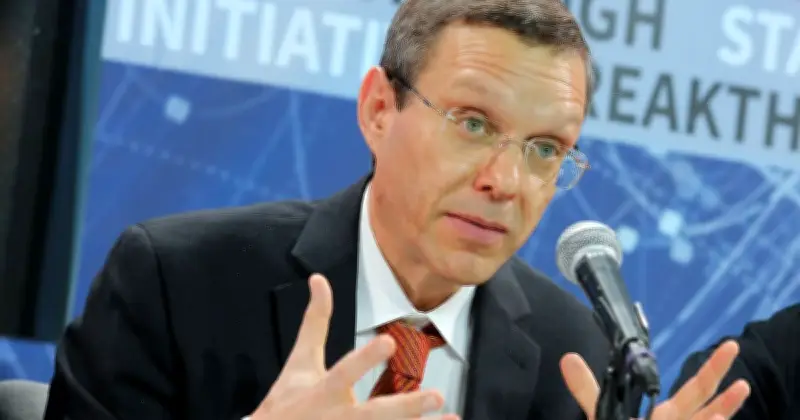
Professor Avi Loeb, a Harvard astronomer appointed last month by the White House to lead a new UFO advisory council, has stated that US officials are 'baffled' by mysterious objects tracked by the military over decades. He said the government is turning to scientists because the objects may not be human-made.
Government Outreach Signals Uncertainty
Loeb, who heads a team of more than a dozen experts, told Fox News Digital that the government's outreach indicates genuine uncertainty. He said: 'The fact that they are reaching out to scientists like myself indicates, in my mind, that they are baffled by what they are seeing, and they think that maybe it's not human-made.' The council is reviewing four batches of declassified UAP (unidentified anomalous phenomena) materials released by the Trump administration.
UAP Definition and Reporting Structure
UAP is the official term encompassing objects observed in the air, underwater, and in space. Loeb's group will report to the UAP Governing Board under the Office of the Director of National Intelligence (ODNI). An ODNI official visited Loeb at home in early June to recruit him. His team is examining public disclosures but has requested 50 additional videos, images, and documents from the Pentagon and other agencies. Access has so far been blocked on national security grounds, primarily to protect sensitive sensor technology from adversaries.
Mission: Determine Origin of Phenomena
Loeb's mission is to determine whether the phenomena are advanced foreign technology or something non-human. He said: 'In the second case, if it's not human-made, then that's the biggest discovery ever made by science, and the US government has the privilege of ushering in this new realisation that we have a neighbour visiting us.' He cautioned that many sightings will prove mundane — space junk, satellites, or broken debris. He added: 'Unless they manoeuvre in ways that cannot be explained by gravity, you should assume that they are space junk.' However, he highlighted cases involving unusual movement reported by US Navy pilots during training exercises in 2014 and 2015.
Loeb's Background and Previous Claims
The astronomer, who directed Harvard's astronomy department until 2020, gained prominence in 2017 after the discovery of 'Oumuamua, the first known interstellar object to pass through our solar system. Loeb argued it displayed anomalous characteristics consistent with a light sail from an alien civilisation, disputing explanations that it was a natural remnant of a Pluto-like world. He later founded the Galileo Project at Harvard to search scientifically for extraterrestrial artefacts.
White House Push for Transparency
The White House push for transparency began in February when President Trump ordered the declassification of files related to UAPs and aliens amid 'tremendous interest.' The latest batch of materials was released by the Department of War on Friday. Loeb noted that one widely discussed image from the 1969 Apollo 12 mission, showing apparent unidentified phenomena on the Moon, has been attributed by authorities to cosmic rays.
Council Goals and Impact
Beyond analysis, the council aims to recommend improved sensors for future detections. Loeb said better technology would help distinguish potential Chinese drones or other threats from truly anomalous objects, bolstering national security regardless of the origin. While tempering expectations, Loeb praised the administration's openness. His work could prove pivotal if any cases defy conventional explanation. The possibility of non-human intelligence would represent a paradigm shift for science and humanity.
Loeb's appointment and comments arrive as public and political interest in UAPs continues to grow, with figures such as Neil deGrasse Tyson urging fuller disclosure. The Harvard professor's council operates strictly on already-declassified or requested materials, but its findings could shape future government policy on one of the most intriguing questions in modern astronomy.