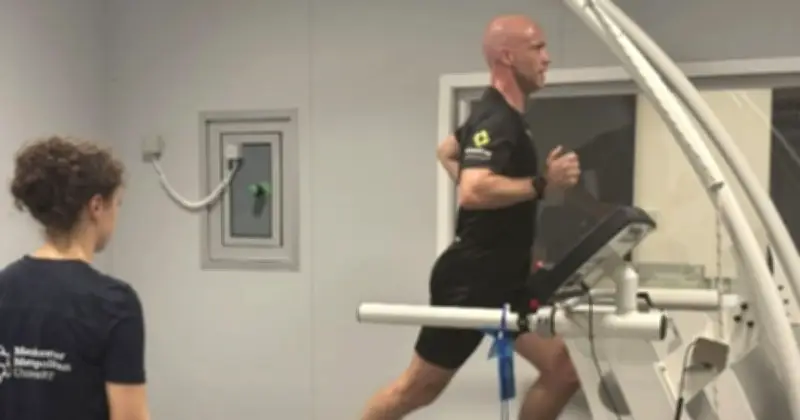
UK scientists have given English match officials at the World Cup a fitness edge with weeks of state-of-the-art training to cope with sweltering US heat and humidity. Six Premier League referees and assistants are officiating at the tournament, including referees Anthony Taylor and Michael Oliver, and assistant referees Gary Beswick, Adam Nunn, Stuart Burt, and James Mainwaring.
Three of them—Taylor, Beswick, and Mainwaring—spent weeks at Manchester Metropolitan University's (MMU) environmental chamber in the Institute of Sport before departing. This facility simulates the challenging conditions of the host nations: extreme temperatures, high humidity, and high altitude.
Intense Preparation for Unique Challenges
Elite referees must cover significant distances during matches while making rapid, high-pressure decisions. Anthony Taylor, who used the chamber ahead of the Qatar World Cup and the Euros in Germany, said: "Using the chamber is a crucial part of preparation for big tournaments to help us be in the best physical condition possible. There's a huge difference in heat, humidity, altitude, time zones, and travel length."
Tournament football presents unique challenges compared to domestic leagues, compressing multiple matches into a short timeframe and adding travel and climate strain. Taylor noted: "One match can last over 130 minutes, so it's important we have both the physical and mental capacity to cope."
Simulating World Cup Conditions
Dr. Dale Read, MMU's Senior Lecturer in Sport Performance, explained: "The environmental chamber replicates temperature, humidity, and altitude from environments worldwide. Acclimation training helps lower physiological and perceptual responses when performing in heat and humidity, ultimately improving performance."
Temperatures at the World Cup could reach 40°C with 80% humidity. Dr. Read added: "We take an isothermic approach, matching environmental conditions to the planned training. Referees can execute their normal training plan with us."
Assistant referee James Mainwaring said: "The chamber gets us used to the conditions we'll face. You turn up to the tournament already adapted to the heat."
Monitoring and Hydration Strategies
The Institute of Sport team, including two PhD students funded by Professional Game Match Officials (PGMO), monitored referees' responses using core body temperature (via ingestible telemetric pills), heart rate, and pre- and post-session body mass to assess fluid loss. Dr. Read said: "This monitoring highlights hydration's importance in maintaining physical output and cognitive performance."
Gary Beswick noted: "Realizing how much fluid we lose and measuring weight before and after shows hydration is key. Heat can affect mental sharpness, but repeated exposure helps your body and mentality cope better."
Manchester Met and PGMO have collaborated for over four years, supporting officials ahead of major tournaments like the FIFA World Cup 2022, UEFA Euro 2024, and the FIFA Club World Cup 2025.
Taylor will referee his first match on June 18 in Mexico City, officiating the Uzbekistan vs. Colombia Group K match at Estadio Azteca. The venue sits at 2,200 meters above sea level, with expected evening temperatures of 21–24°C and muggy humidity due to the summer rainy season.