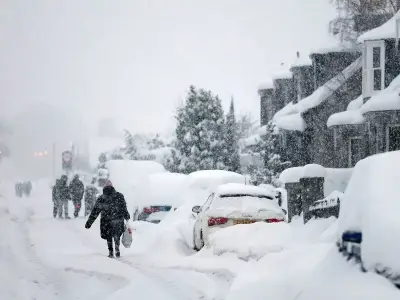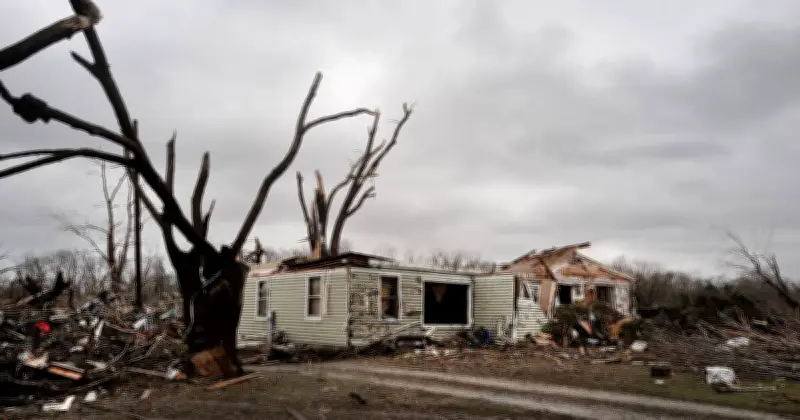
A 'large and extremely dangerous' tornado has been confirmed over Charleston, Illinois, with the National Weather Service (NWS) urging residents to take cover immediately. The storm poses a life-threatening risk to those in its path.
At 6:57 p.m. local time, the NWS reported the tornado moving east at 40 mph through Cole and Cumberland counties. The agency warned that flying debris could be deadly and that mobile homes would be destroyed. Considerable damage to homes, businesses, and vehicles is expected, with complete destruction possible.
'To protect your life, TAKE COVER NOW! Move to a basement or an interior room on the lowest floor of a sturdy building. Avoid windows. If you are outdoors, in a mobile home, or in a vehicle, move to the closest substantial shelter and protect yourself from flying debris,' the NWS advised.
Fox Weather reports that emergency services are responding to damage and fallen power lines in and around Charleston. First responders are navigating debris-littered roads to conduct safety checks, while utility teams assess infrastructure damage.
The Peoria Journal Star notes that the region was under a tornado watch through Wednesday. By 11:15 p.m., 3,000 people in Woodford County were without power due to severe weather, according to Ameren.
The NWS has also issued a flash flood watch for Peoria and much of central and east-central Illinois, with rainfall expected to exceed two inches in a short period. The highest flood risk lies south of Peoria and west of Bloomington.
Weather data indicates Illinois is on track to surpass last year's record for tornadoes. AccuWeather reports 145 tornadoes have been recorded statewide as of Sunday, just two shy of the 2025 record of 147. This milestone is expected to be exceeded on Wednesday afternoon.
Illinois's tornado season typically runs from late April to late May or early June, but this year has seen storms extending into June. The National Oceanic and Atmospheric Administration notes that tornadoes can occur at any time, and associated hazards include flash flooding, large hail, and straight-line winds.
Last week, a tornado struck the Streator area, causing severe damage. CBS reported that powerful winds crushed houses, snapped power poles, and tossed cars.