The United States is taking major steps to end its 50-year ban on overland supersonic flight, with the Federal Aviation Administration (FAA) planning new noise-based rules that could permit commercial passenger jets to travel at over 700mph, reducing transatlantic trips to under four hours.
The Trump administration maintains that technological progress now enables aircraft to exceed the speed of sound without producing the deafening sonic boom that led to the ban in 1973. Since that year, the FAA has prohibited civil aircraft from surpassing Mach 1 over US land to avoid disruptive sonic booms.
New Noise Threshold Replaces Absolute Ban
The Department of Transportation intends to substitute the ban on overland supersonic flight with a noise threshold. This will allow an aircraft to travel faster than Mach 1 over land provided the noise generated remains below a specified level, as confirmed in a notice published by the FAA on Tuesday, June 30.
The notice follows an executive order by US President Donald Trump issued in June 2025, which instructed the FAA to repeal its "prohibition on overland supersonic flight ... establish an interim noise-based-certification standard ... and remove additional regulatory barriers that hinder the advancement of supersonic aviation technology in the United States."
Mach 1 equals the speed of sound, approximately 1,235 km/h (767 mph or 343 m/s) in dry air at sea level at 20°C. The FAA aims to complete both rules by mid-2027, according to the notice.
Technological Advances Eliminate Old Sonic Boom
FAA Administrator Bryan Bedford stated that technological developments will eradicate the old sonic boom. "This means we can ultimately repeal the ban from the 1970s on supersonic flight over US territory while minimizing noise impacts to residents in communities along the route and near airports," he added.
During the 1960s, aircraft travelling faster than the speed of sound — roughly 660 mph at high altitudes — generated shock waves that reached the ground and struck human ears as a deafening crack resembling a gunshot, according to Forbes. Testing throughout that period revealed that repeated sonic booms shattered windows, caused property damage and prompted thousands of complaints from the public.
In its 1973 ruling, the FAA declared that given the technological limitations of the era, "a prohibition was needed to protect the public from sonic boom." Several years later, Air France and British Airways launched Concorde. Both carriers were permitted to operate services into New York's John F. Kennedy International Airport, though flights were required to remain subsonic while over US soil.
American Firms Develop Quieter Supersonic Jets
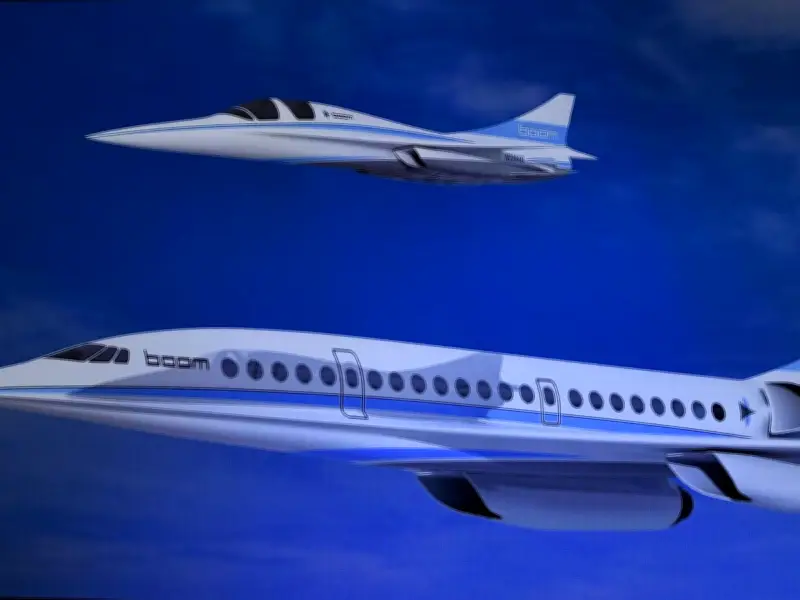
A number of American firms are currently developing a new breed of luxury supersonic passenger jets boasting considerably quieter sonic booms and greater fuel efficiency. Colorado-based Boom Supersonic claims to have secured pre-orders from United Airlines, American Airlines and Japan Airlines for its Overture aircraft, which will accommodate 60-80 passengers. Atlanta-headquartered Spike Aerospace is working on its smaller Diplomat jets, designed to carry up to 18 passengers. Both firms' websites promote future transatlantic journeys completed in under four hours.