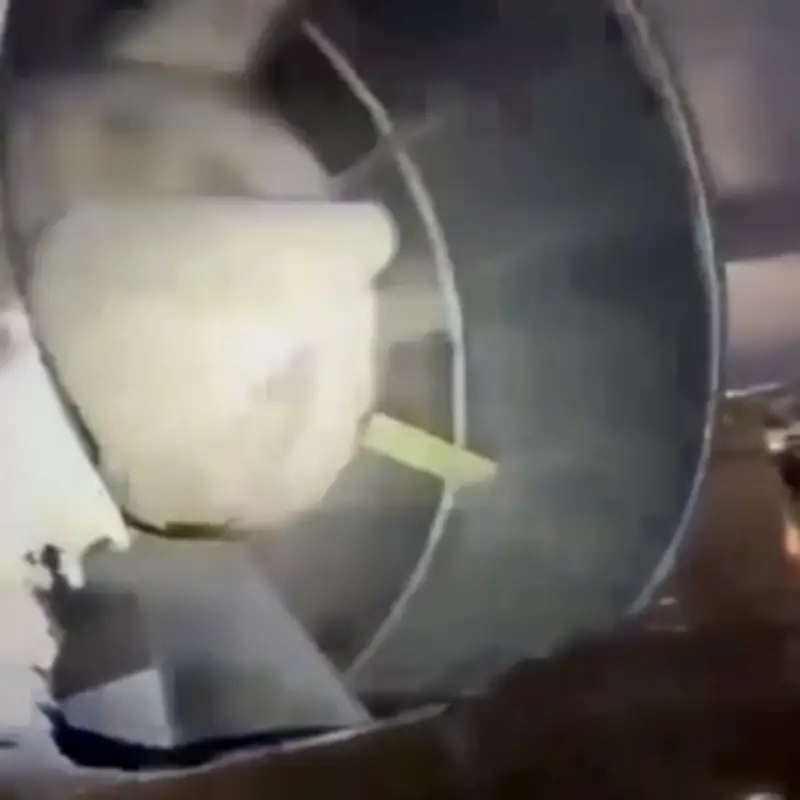
A passenger jet carrying more than 200 people suffered engine damage after being struck by lightning while airborne. SriLankan Airlines flight UL606 was climbing out of Colombo in the early hours of Friday (12 June) when the lightning strike occurred.
Incident Details
Travelers reported hearing a thunderous bang before witnessing sparks flying from the back of the left engine. The flight crew decided to return to Colombo International Airport rather than continue the journey to Sydney, Australia.
Video captured after the aircraft touched down safely reveals a substantial portion of the damaged engine's exhaust nozzle was missing. Despite the alarming incident, none of the 207 passengers or 16 crew members aboard suffered any injuries, according to NeedToKnow.
Aircraft and Aftermath
The plane, an Airbus A330-243 fitted with two Rolls-Royce Trent 772B-60 turbofan engines, was manufactured in 2004. A substitute aircraft departed Colombo at 5:51 am and finally landed in Sydney at 8 pm, more than five hours later than its planned 2:40 pm arrival.
Passenger Kanchana de Silva later posted online: "What began as a routine flight turned into an unexpected and frightening experience. During those uncertain moments, the professionalism, calmness and dedication shown by the captain and crew gave us confidence and reassurance."
She added: "Your composure helped keep passengers calm and reminded us that we were in capable hands. I would also like to thank my fellow passengers. In a stressful situation, everyone remained patient, cooperative and respectful, allowing the crew to focus on our safety."
"After our safe landing in Katunayake, the care and support provided by SriLankan Airlines were exceptional. Food, water and other necessities were arranged promptly, and every effort was made to ensure passengers were comfortable and looked after. What impressed me most was how quickly another flight was organised, allowing us to continue our journey and arrive safely in Sydney."
Aviation Safety Context
Commercial aircraft are built to endure lightning strikes, which typically occur to an airliner once every one or two years. In most instances, the electrical charge flows safely through the aircraft's frame and the flight can proceed as normal. Nevertheless, engineers conduct comprehensive checks following a strike to examine for hidden damage and confirm the aircraft is safe to return to operation.