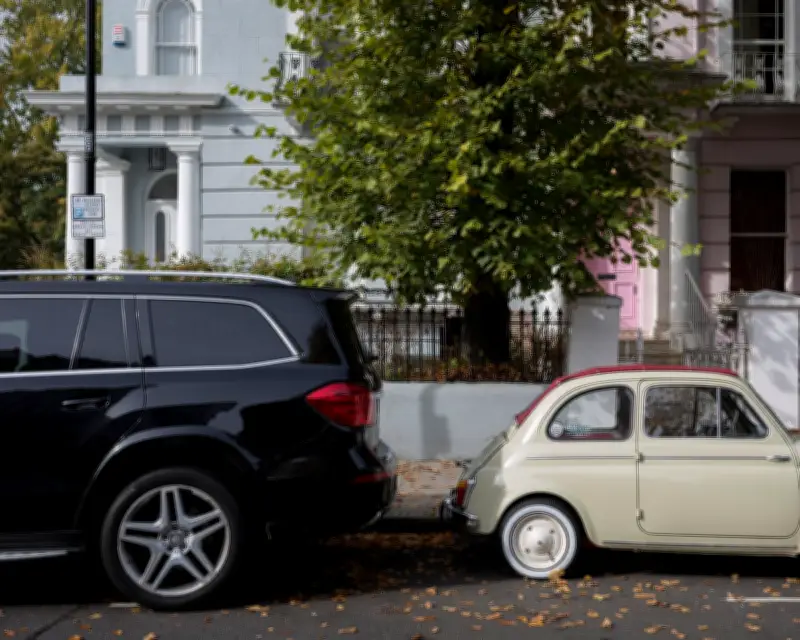
European cars have expanded by an average of 1.2cm in length, 0.5cm in height, and 0.5cm in width each year since 2000, according to an analysis by the campaign group Transport & Environment (T&E). This trend, dubbed “relentless carspreading,” has persisted for 25 years despite declining family sizes, raising concerns over safety, emissions, and urban space.
Impact on Road Safety
If current trends continue unchecked, the analysis projects an additional 2,600 road user deaths annually by 2040, including 79 children. The projections are based on research from Belgium showing a 10cm increase in bonnet height raises the risk of death for vulnerable road users by 27%, and US research indicating an 81% higher child fatality risk with such size increases.
Lucien Mathieu, T&E analyst and lead author, said: “This relentless carspreading highlights one critical question: where do we stop? The linear trend is so clear.” The study compared a “right-sizing” scenario, where average car sizes return to 2015 levels, against the current trajectory.
Urban Space and Parking Loss
Car bloat is also shrinking urban parking. Cities are expected to lose 8.5-14% of on-street parking by 2040 if the trend continues. London and Berlin are each predicted to lose about 100,000 parking spaces. Hannah Budnitz, a researcher at the University of Oxford’s transport studies unit, noted that parking bays are often not re-marked, forcing larger vehicles to take two spaces or spill into road space.
Energy and Environmental Costs
The extra resources needed for larger vehicles would equate to 100 million barrels of oil imports and 22.5 terawatt hours of electricity. Brian Caulfield, a transport researcher at Trinity College Dublin, said: “When viewed through a climate lens, larger vehicles require more energy, regardless of whether they are fossil fuelled or electric. This added demand could be equivalent to the output of an extra 1,500 offshore wind turbines.”
The findings exclude additional deaths from air pollution or climate breakdown from increased fossil fuel use.
Policy Recommendations
T&E recommends capping bonnet heights and car widths, adjusting taxes to discourage larger vehicle purchases, and tightening vehicle standards to improve visibility of young children from the driver’s seat. Budnitz described the projections as “probably conservative” since they omit vehicle weight, which increases resource consumption and road wear.
The analysis coincides with exclusive Guardian research showing potential SUV buyers are undeterred by warnings of higher pedestrian fatality risks.