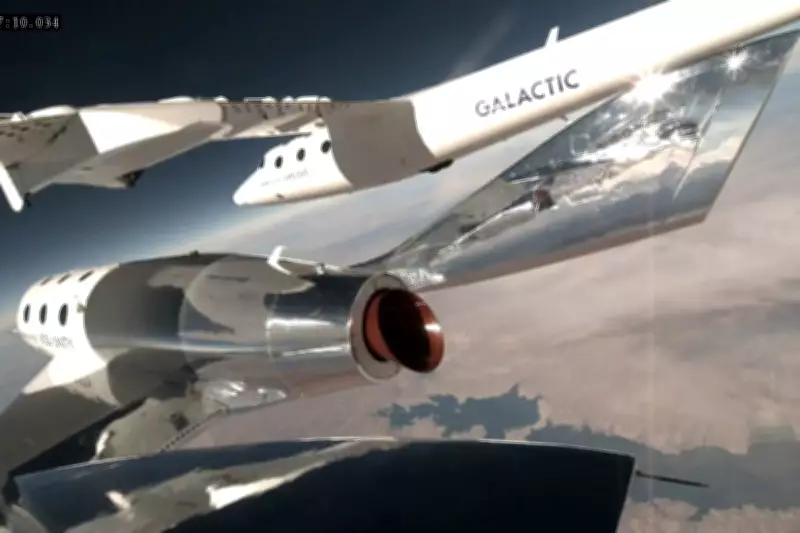
Virgin Galactic, the pioneering space tourism venture founded by British billionaire Richard Branson, has officially reopened ticket sales for its suborbital pleasure flights after a hiatus of nearly two years. The company announced that seats are now priced at a substantial $750,000 each, marking a significant increase from previous offerings.
Limited Availability and Future Plans
During a conference call with investors and journalists on Monday, CEO Michael Colglazier revealed that Virgin Galactic will release a limited tranche of 50 new spaces for its 90-minute spaceflights. These expeditions are scheduled to commence in late 2026 or early 2027, following the completion of flights for the existing founding astronaut community, which comprises over 650 individuals.
Colglazier emphasized that this pricing level is temporary, stating, "We expect our prices will rise in steps over the near to medium term, and once this initial tranche of space flight reservations is concluded, we plan to retire sales at the $750,000 level." This represents a notable jump from the $450,000 per person price tag in 2021, reflecting the high costs and challenges inherent in the space tourism industry.

Operational Scaling and Competitive Landscape
The company plans to initially operate approximately four spaceflights per month as it refines its procedures, with ambitions to scale up to eight and then ten flights monthly. This move positions Virgin Galactic as a key player in the niche market, especially with rival Jeff Bezos's Blue Origin pausing tourist flights for at least two years as of January, and Elon Musk's SpaceX focusing on cargo, satellites, and government contracts.
Virgin Galactic's approach utilizes a rocket-powered spaceplane, carried to high altitude by a conventional aircraft before accelerating into space. Passengers experience a few minutes of microgravity before gliding back to Earth, offering a unique thrill for high-income adventurers.
Historical Context and Challenges
Despite being in development for over two decades, Virgin Galactic has faced numerous setbacks, including mechanical issues, manufacturing delays, and a tragic fatal crash in 2014 that claimed the life of co-pilot Michael Alsbury. The company's journey has been marked by repeated delays from initial promises of starting flights in 2011.
Branson himself, known for his daredevil stunts, took a highly publicized spaceflight in July 2021, followed by the first fully commercial expedition in 2023. However, the industry remains in its infancy, with no company yet achieving a low-cost model that would enable sustainable, large-scale operations.
Market Dynamics and Future Prospects
The space tourism sector, while over 25 years old, still caters to a very small clientele due to the enormous upfront investments required for reusable space vehicles. These costs are recouped through steep ticket prices, limiting market expansion. Virgin Galactic's reopening of sales underscores the ongoing demand among affluent individuals for extraterrestrial experiences, even as the company navigates the complexities of turning Branson's soaring ambitions into a viable business.