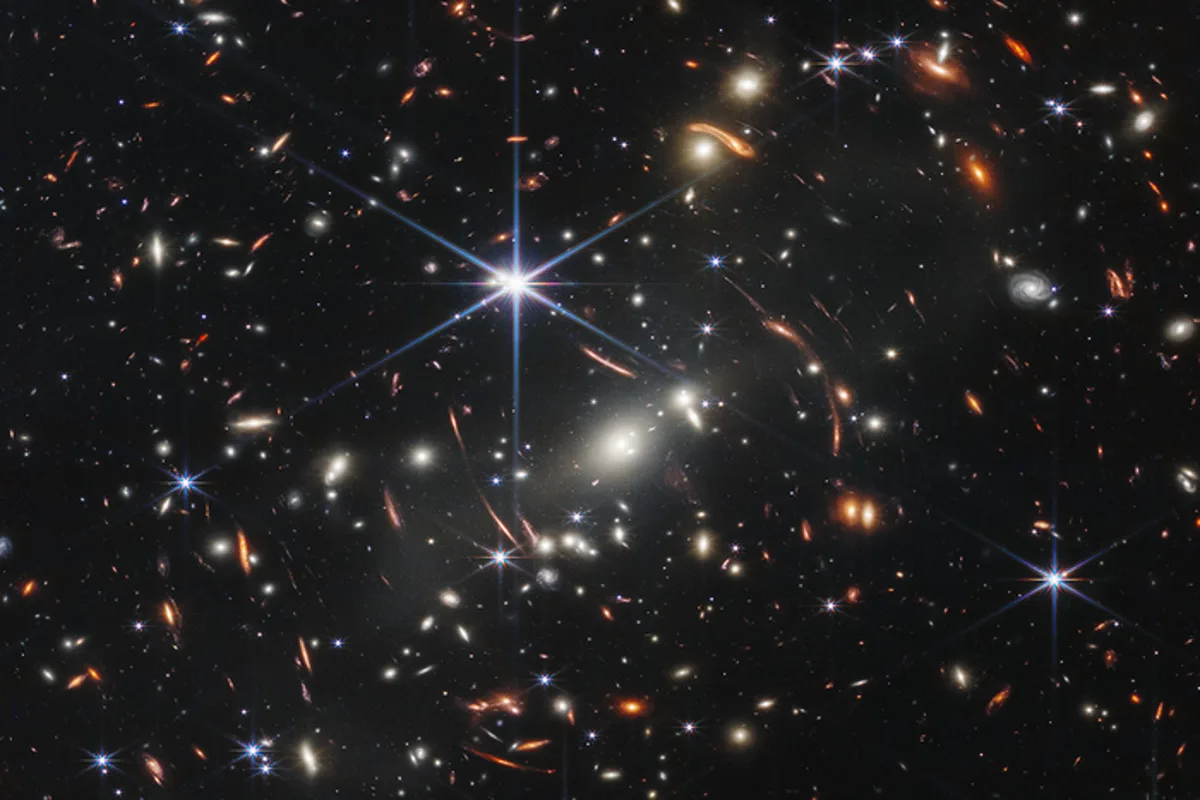
A new theory challenges the conventional Big Bang model, suggesting the universe may have begun from the collapse of a massive black hole. The theory, published in Physical Review D, proposes that the early universe's dense matter collapsed under gravity, then rebounded outward in a 'bounce', rather than originating from a singularity.
The Big Bang theory, while supported by many observations, leaves fundamental questions unanswered, such as what existed before the singularity and the nature of the unknown forces driving cosmic inflation. The new model avoids these issues by combining general relativity with quantum mechanics, showing that a gravitational collapse can lead to a bounce without forming a singularity.
Lead author Enrique Gaztanaga of the Institute of Space Sciences in Barcelona explains that the bounce is inevitable under the right conditions. The theory predicts the universe is not flat but slightly curved, like Earth's surface, which could be tested by future observations. If confirmed, this curvature would support the bouncing scenario.

The 'black hole universe' framework suggests our entire observable universe lies inside a black hole formed in a larger parent universe. Researchers hope further development will shed light on cosmic mysteries such as the origin of monster black holes, dark matter, and galaxy evolution.