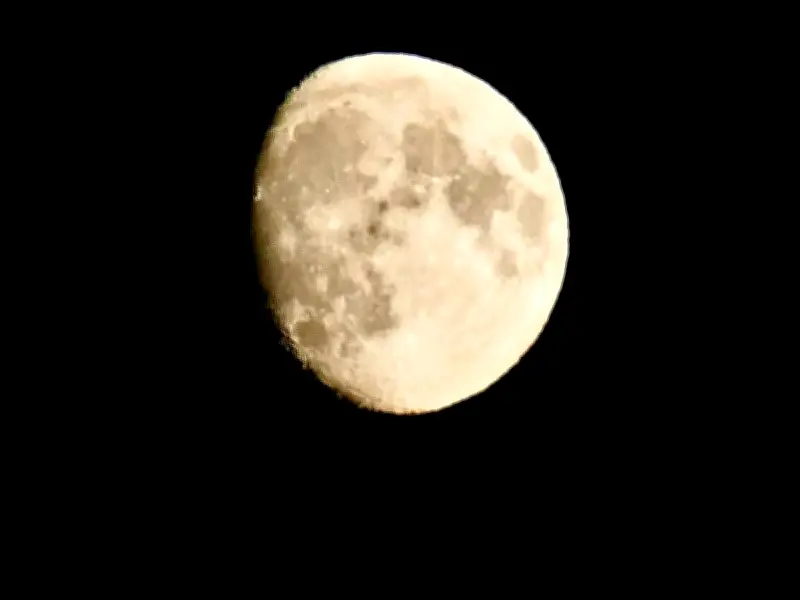
A SpaceX Falcon 9 rocket upper stage is on a collision course with the Moon and will slam into the lunar surface on Wednesday. The impact flash may be visible from Earth through powerful telescopes.
The abandoned rocket segment, about the size of a five-storey building, measures around 40ft and weighs around 10,000lb. It was launched last year as part of a US-Japanese mission carrying two lunar landers and scientific equipment to the Moon. The crash will carve out a crater and send up a plume of dust and rubble.
Impact details and visibility
Space-tracking expert Bill Gray predicts the rocket will strike the Moon at around 5,400mph – about seven times the speed of sound. He believes the impact will occur near Einstein Crater on the Moon's sunlit western limb.

The collision itself is not expected to be visible from Earth, but astronomers say the impact flash, lasting less than a second, might be seen through powerful telescopes. The plume of dust and debris is considered more likely to be visible, possibly stretching for several miles above the lunar surface and remaining visible for tens of minutes.
Bill Gray, who first identified the rocket stage's collision path, wrote on his Project Pluto website: "Maybe we'll see the flash. Maybe we'll see rocks ejected from the crater. Maybe we'll even see both."
Dr Matt Bothwell, public astronomer at the University of Cambridge, told the BBC that people with access to a sophisticated telescope may be able to spot a flash radiating off the Moon's surface. Observers in the eastern US and Canada, along with much of South America, are expected to have the best chance of seeing it.
Space junk concerns
While scientists are not too concerned about this particular piece of space junk, it highlights the growing threat as more objects crowd into orbit. "Things are getting crowded up there," said Gray, who plans to view the aftermath from New Brunswick, Canada.
This will be the second dead rocket known to crash into the Moon accidentally. A Chinese rocket segment dug out a pair of craters on the lunar far side in 2022.
Los Alamos National Laboratory's Benjamin Fernando told The Associated Press: "Part of the reason for our interest in this event is to figure out how much of a hazard debris impacts pose to future astronauts." He anticipates an impact crater nearly 90 feet across and 16 feet deep – too small to see from Earth but visible to spacecraft.
Retired astrophysicist Jonathan McDowell told The Associated Press that "this impact will not be a problem", but said that "in a future where there are long-term bases on the Moon, similar impacts would be an issue, and we need not to leave rocket stages in chaotic orbits of this kind".