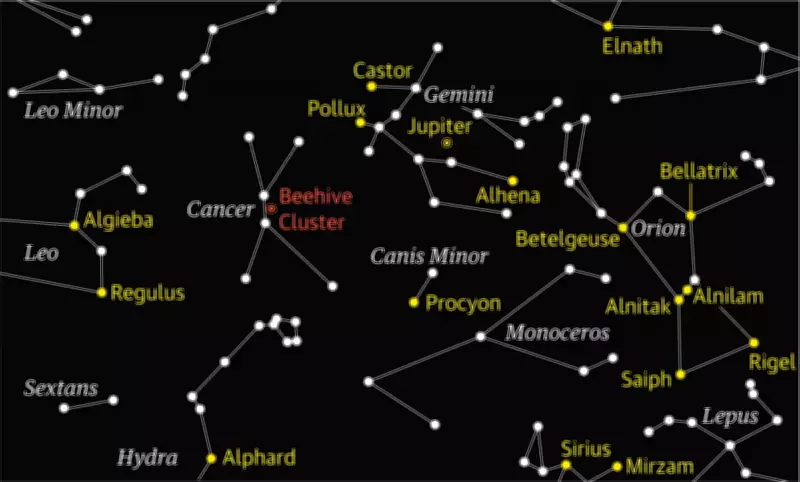
Starwatch: Patience Is Essential for Viewing the Beehive Cluster in Cancer
Astronomy enthusiasts are being reminded that observing the Beehive Cluster, located within the constellation Cancer, demands a significant amount of patience and ideal viewing conditions. This celestial object, also known as Messier 44, is a prominent open star cluster that can be a rewarding sight for dedicated stargazers, but its faint nature often makes it challenging to spot without proper preparation.
Understanding the Beehive Cluster's Characteristics
The Beehive Cluster is one of the nearest open clusters to Earth, situated approximately 577 light-years away. It contains hundreds of stars, though only a few dozen are typically visible to the naked eye under optimal conditions. The cluster's name derives from its resemblance to a swarm of bees, with stars appearing densely packed together in a hazy patch of light.
To successfully observe the Beehive Cluster, astronomers recommend finding a location with minimal light pollution, such as rural areas or designated dark-sky sites. Clear, moonless nights are crucial, as even slight atmospheric interference can obscure the cluster's faint glow. Using binoculars or a small telescope can enhance the view, revealing more stars and details within the cluster.

Tips for Successful Stargazing Sessions
For those eager to catch a glimpse of the Beehive Cluster, planning is key. Check weather forecasts to ensure clear skies, and allow your eyes to adjust to the darkness for at least 20 minutes before attempting to observe. The cluster is best viewed during late winter and early spring in the Northern Hemisphere, when Cancer is high in the sky during evening hours.
Patience is not just about waiting for the right conditions; it also involves taking time to scan the sky slowly. The Beehive Cluster may initially appear as a faint smudge, but with persistence, its individual stars can become discernible. This makes it an excellent target for both novice and experienced astronomers looking to hone their observational skills.
In summary, while the Beehive Cluster in Cancer presents a challenge due to its faintness, the effort is well worth it for those passionate about exploring the night sky. With patience, proper equipment, and favorable conditions, stargazers can enjoy one of the sky's most beautiful open clusters.