Space Journal: A Visual Odyssey of Cosmic Endeavour
As the Artemis II astronauts return from lunar orbit, a vibrant new publication titled Space Journal emerges, celebrating the intricate science, innovative spacesuits, and indomitable spirit that have propelled humanity into the cosmos. This richly illustrated book, published by Thames and Hudson, weaves together archival memorabilia, groundbreaking experiments, and breathtaking scenes to map both real and imagined encounters in our celestial neighbourhood.
The Art and Science of Spacesuit Design
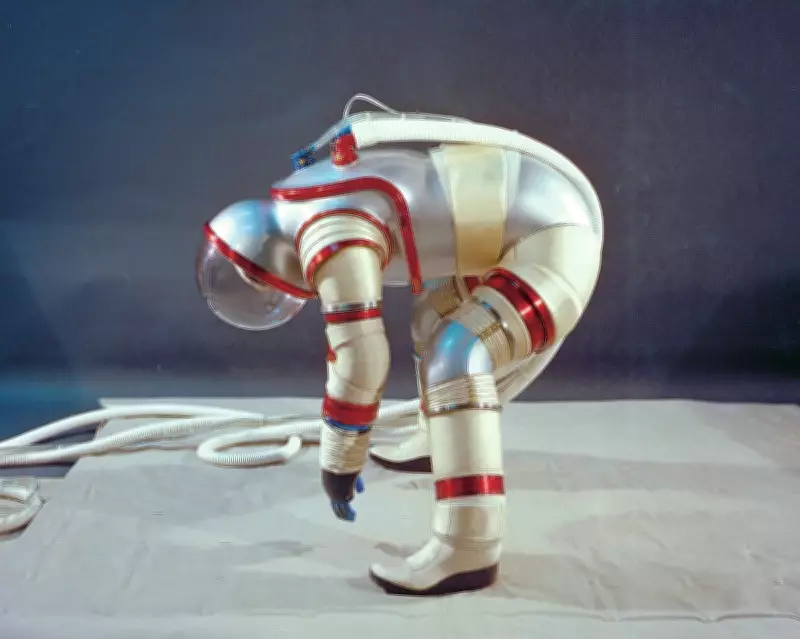
From the early pressure suits of the 1930s to the advanced wearable spacecraft of today, Space Journal delves into the evolution of spacesuit technology. A striking image features designer Hubert 'Vic' Vykukal modelling the AX-3 spacesuit at NASA's Ames Research Center in 1977, showcasing the mid-century innovations that made extravehicular activity possible. The book also highlights modern replicas, such as those crafted by artist Ryan Nagata, who began his obsessive spacesuit-making quest at age 14 after watching Apollo 13. His high-fidelity Apollo A7LB replica underscores the immense challenges of creating a suit that provides oxygen, regulates temperature, and protects against micrometeoroids in the vacuum of space.
Historical Milestones and Cosmic Visions
Space Journal traces key moments in space history, including the Apollo 11 liftoff in 1969, witnessed by former US President Lyndon B. Johnson at Kennedy Space Center. It also explores artistic interpretations of the cosmos, such as Lucien Rudaux's 1937 illustrations in Sur Les Autres Mondes, which influenced later artists like Chesley Bonestell. The book pays tribute to scientific pioneers, featuring physicist Jocelyn Bell Burnell with the Cambridge radio telescope array that first detected pulsars in 1967.

From Rockets to Interstellar Probes
The narrative extends to technological advancements, from Dr. Robert H. Goddard's early rocket experiments in the 1930s—once mocked by The New York Times—to the James Webb Space Telescope's sunshield and primary mirrors. It also covers the Voyager Golden Records, launched in 1977 with greetings, sounds, and music, now travelling through interstellar space. Space Journal illustrates how the 20th century proved space travel feasible, while the 21st explores its profitability, with modern dependencies on satellites for communication, navigation, and defence.
Through a tapestry of photographs and stories, Space Journal: The Art and Science of Cosmic Exploration offers a comprehensive look at humanity's relentless pursuit of the stars, blending historical insight with futuristic potential in a visually stunning format.