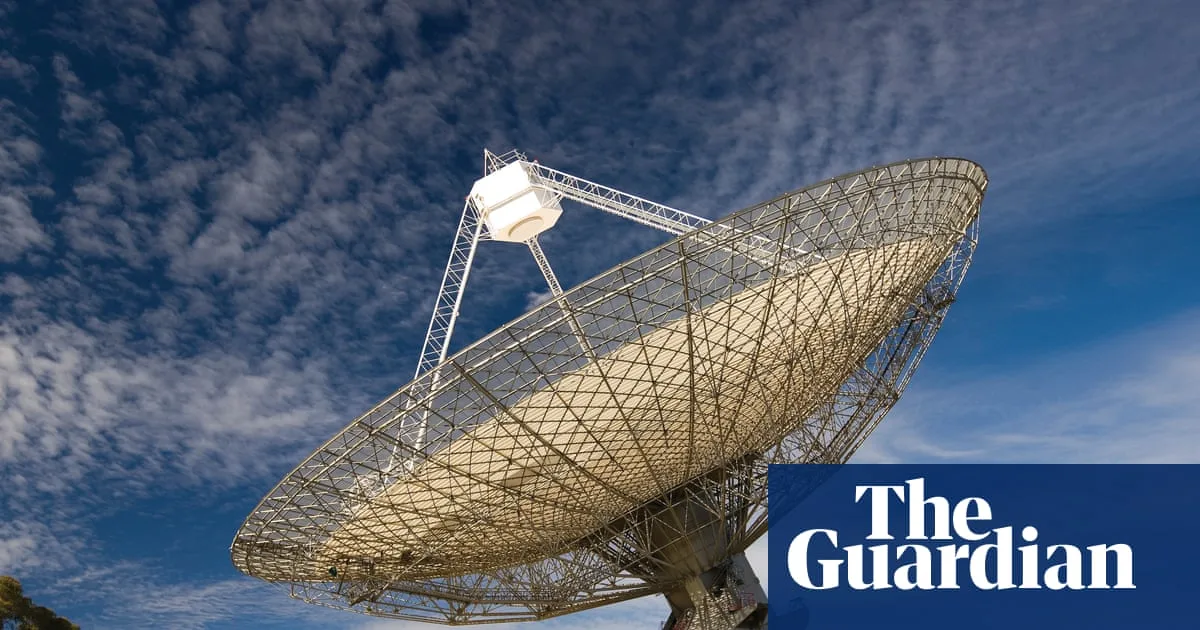
The Murriyang radio telescope in Parkes, New South Wales, which broadcast the Apollo 11 moon landing in 1969, is now tracking the Artemis II lunar mission. The 64-metre dish, immortalised in the film 'The Dish', is observing the Orion spacecraft as it carries four astronauts to the moon for the first crewed lunar mission since Apollo 17 in 1972.
Artemis II launched from Florida on Thursday. The spacecraft will orbit Earth before heading to the moon, then slingshot back to splash down in the Pacific. The Parkes telescope has volunteered to track Orion and send data to Nasa, demonstrating its capabilities for what Nasa's Kevin Coggins describes as 'building a resilient, public-private ecosystem'.
The primary Australian role is held by the Canberra Deep Space Communication Complex (CDSCC), part of Nasa's Deep Space Network, run by the CSIRO. The CDSCC will track the mission whenever the moon is visible in its sky, and during working hours, its operators will manage the entire network. 'We'll be the primary communications point so the astronauts can contact home,' says education officer Rhianna Lyons.

The Australian National University is also involved, using its Quantum Optical Ground Station at Mount Stromlo Observatory to test laser communications with Orion. Laser communications can transmit data up to 100 times faster than radio waves. 'Building this capability in the southern hemisphere is critical,' says Dr Kate Ferguson from the ANU Institute for Space. Southern Launch in South Australia will assist with tracking using a Raven Defence dish.
Artemis II will test life support systems, navigation and radiation protection ahead of a planned 2028 moon landing, which aims to develop a lunar launchpad for future missions to Mars. The astronauts will fly further from Earth than anyone before, around the dark side of the moon. Swinburne University astronomer Alan Duffy calls it a historic mission, noting it sends humans beyond low Earth orbit for the first time since Apollo.