NASA Discovers New Meteor Shower from Sun-Torn Asteroid Debris
Scientists at NASA have made a groundbreaking discovery, identifying a brand-new meteor shower created by the remnants of a massive asteroid being torn apart by the sun's immense gravitational forces. This celestial phenomenon provides unprecedented insights into the behavior of near-Earth objects and offers stargazers a fresh astronomical spectacle to observe annually.
The Discovery Process
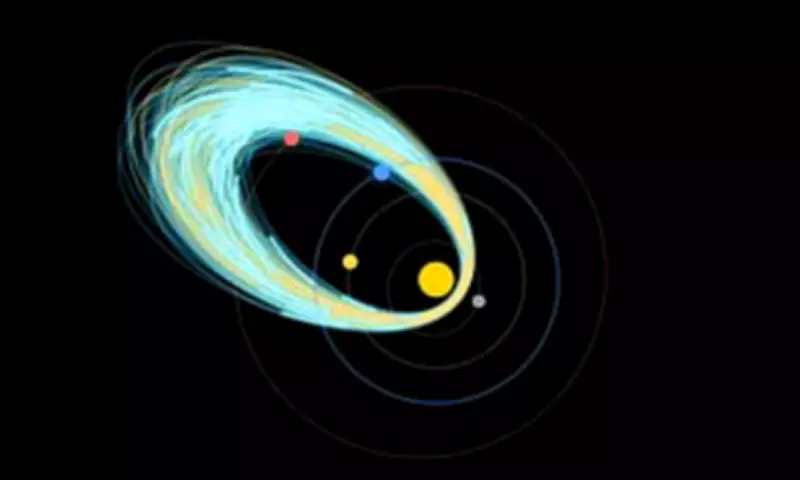
Researchers meticulously analyzed millions of meteor observations, ultimately pinpointing a distinctive cluster of 282 shooting stars that all appeared to originate from the same precise location in space. According to the scientific team, these luminous trails represent the aftermath of a crumbling celestial body—specifically a rare hybrid object known as a rock-comet—that ventured dangerously close to our solar system's central star.
Dr. Patrick Shober, lead author from NASA's Johnson Space Center, explained the significance in The Conversation: "What makes this discovery so exciting is that we are essentially witnessing a hidden asteroid being baked to bits. The sun is tearing a huge asteroid to pieces, leaving a wake of debris that Earth is now passing through."

Understanding Meteor Showers
Meteor showers occur when Earth's orbit intersects with clouds of dust and small rocks scattered throughout space. As these particles enter our atmosphere at tremendous speeds—often exceeding 15 miles per second—they vaporize upon contact with air molecules, creating the brilliant flashes we observe as shooting stars. Most meteor showers originate from comets, but this newly discovered event stems from a different source entirely.
Dr. Shober's team determined that the parent object belongs to a rare category called rock-comets. Unlike typical comets that disintegrate through sublimation (where ice transforms directly to gas), this asteroid-like body appears to be crumbling due to extreme solar heating and gravitational stresses. "Based on how these meteors break apart when they hit our atmosphere," Dr. Shober noted, "we can tell they are moderately fragile, but tougher than stuff from comets."
Observation Details and Scientific Significance
The newly designated M2026-A1 meteor shower will be visible annually between March 16 and April 7, radiating from the region between the constellations Libra, Virgo, and Corvus. While not as intense as more established meteor displays like the Perseids or Leonids, this event offers scientists valuable data about asteroid composition and disintegration processes.
The parent asteroid follows what researchers describe as an "extreme orbit," bringing it approximately five times closer to the sun than Earth's own orbital path. This proximity subjects the space rock to intense thermal and gravitational forces, causing surface cracking, gas release, and gradual fragmentation.
Dr. Shober emphasized the planetary defense implications: "This discovery reveals hidden populations of near-Earth asteroids, which is vital information for planetary defense. Although the meteor shower provides strong evidence, the parent asteroid itself remains elusive due to its dark coloration and rapid movement."
Future Research and Detection
NASA researchers remain hopeful that upcoming missions will help locate the source asteroid. The space agency's NEO Surveyor mission, scheduled for launch in 2027, represents a particularly promising tool. Dr. Shober explained: "This space telescope, dedicated to planetary defense and the discovery of dark, hazardous, sun-approaching asteroids, will be the ideal tool for searching for the shower's origin."
Daily, thousands of tiny space rocks enter Earth's atmosphere, most vaporizing completely before reaching the surface. The solar system contains countless such particles, primarily produced through the disintegration of comets and asteroids. When these celestial bodies begin crumbling—whether from heating, collisions, or rotational stresses—they become "active" objects that astronomers can track through either visible cometary tails or the meteor showers their debris creates.

Distinguishing Space Objects
- Asteroids: Large rocky remnants from early solar system formation, primarily located in the Main Belt between Mars and Jupiter
- Comets: Icy bodies containing methane and other compounds that follow elongated orbits taking them far beyond the inner solar system
- Meteors: The visible atmospheric flashes created when space debris burns up upon entry
- Meteoroids: The actual debris particles traveling through space before atmospheric entry
- Meteorites: Any surviving fragments that reach Earth's surface
This discovery not only adds a new annual celestial event to astronomical calendars but also advances our understanding of how solar forces shape and destroy near-Earth objects, contributing valuable knowledge to planetary defense strategies against potential impact threats.