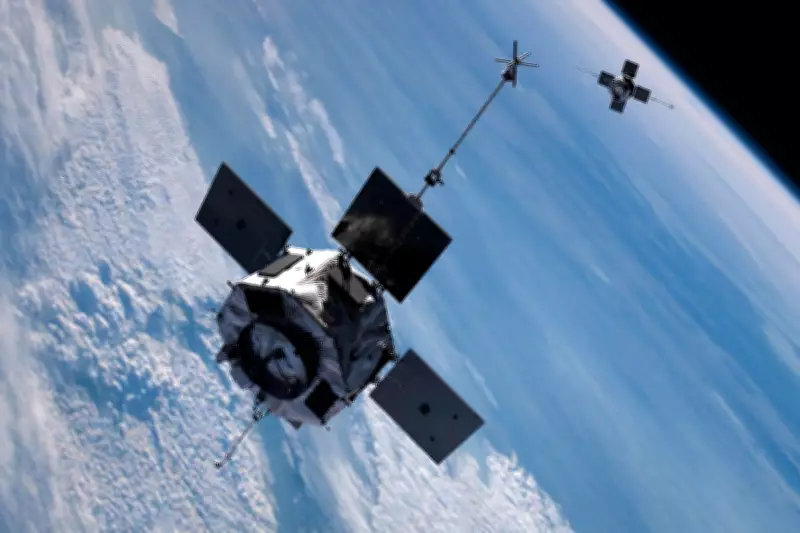
NASA's Defunct Science Satellite Makes Uncontrolled Pacific Re-entry
An ageing NASA science satellite has concluded its mission with a fiery, uncontrolled plunge back to Earth. The Van Allen Probe A spacecraft re-entered the atmosphere over the Pacific Ocean on Wednesday, marking the end of its operational life.
Controlled Demise Over Remote Waters
The United States Space Force confirmed the satellite's re-entry occurred west of the Galapagos Islands. NASA had anticipated that some components of the 1,323-pound (600-kilogram) spacecraft would survive atmospheric entry, though the majority was expected to burn up during descent.
The space agency calculated the risk of bodily harm from falling debris at approximately 1 in 4,200, a relatively low probability given the remote oceanic location. This careful risk assessment followed standard protocols for decommissioned spacecraft.

Twin Satellite Remains in Orbit
The re-entered probe's identical counterpart, Van Allen Probe B, continues to orbit Earth despite being non-functional. NASA does not anticipate this twin satellite making its own re-entry before 2030, providing a considerable buffer for future tracking and planning.
Mission Legacy and Premature Demise
Launched in 2012, both spacecraft were designed to study Earth's Van Allen radiation belts, conducting valuable scientific observations for seven years before ceasing operations. When the satellites exhausted their fuel reserves in 2019, NASA projections suggested they would remain in orbit until approximately 2034.
However, intense solar activity over recent years dramatically accelerated Probe A's orbital decay, bringing forward its atmospheric re-entry by nearly a decade. This solar influence created additional atmospheric drag, gradually pulling the satellite toward Earth.
Challenges in Re-entry Prediction
Dutch space scientist Marco Langbroek noted that predicting precise re-entry trajectories remains inherently difficult. "All re-entries present forecasting challenges," Langbroek explained, "but this particular case proved especially complex due to the satellite's eccentric, lopsided orbit."
The irregular orbital path complicated efforts to determine exactly when and where the spacecraft would descend, though monitoring systems successfully tracked its final trajectory toward the Pacific.
NASA continues to monitor thousands of objects in Earth's orbit, developing improved methods for managing end-of-life spacecraft to minimize risks during re-entry events.