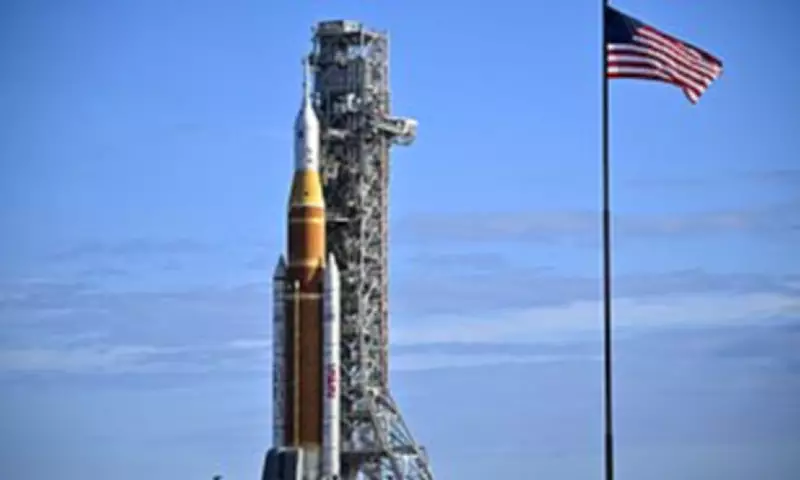
NASA Sets April 1 Launch Date for Artemis II Moon Mission
In what might seem like an elaborate April Fool's Day joke, NASA has announced it is prepared to launch its long-delayed Artemis II moon mission on April 1. This mission marks the first time humans will return to the moon in over five decades, following a series of technical setbacks that postponed the original February launch.
Technical Challenges and Repairs
The mission faced significant hurdles, including hydrogen leaks and helium blockages, which forced NASA to roll the Space Launch System (SLS) rocket back to the Vehicle Assembly Building at Kennedy Space Centre in Florida for repairs. These issues have now been resolved, with the rocket scheduled to return to the launch pad on March 19.
Notably, NASA will skip another wet dress rehearsal—a simulated launch where fuel tanks are filled—before the actual launch. This decision comes after a successful second rehearsal in March, though the first attempt in February was aborted due to a major hydrogen leak.

Mission Details and Crew
Artemis II will not land on the moon but will send astronauts Reid Wiseman, Victor Glover, Christina Koch, and Jeremy Hansen on a looping rendezvous. The SLS rocket will launch into Earth orbit, then detach to send the Orion crew capsule on a 10-day journey around the far side of the moon, ending with a splashdown in the Pacific Ocean.
The crew's proximity to the moon during the flyby will vary based on the launch date, ranging from 4,000 to 6,000 miles, making the moon appear as large as a basketball held at arm's length.
Launch Window and Public Reaction
NASA has targeted a six-day launch window from April 1 to April 6, with April 30 as a backup date. However, agency officials estimate only about four good opportunities within this period. The choice of April 1 has sparked humor on social media, with some joking about potential April Fool's Day delays and others calling it a "conspiracy theorist's dream."
Risks and Pressure
Despite the progress, NASA acknowledges risks, with John Honeycutt of the Artemis II Mission Management Team emphasizing thorough risk assessment. The mission has already been delayed by two years due to heat shield issues from the uncrewed Artemis I mission, and NASA faces pressure to launch by April 2026. New Administrator Jarred Isaacman is pushing for increased launch frequency, inspired by the Apollo missions.
Background and Costs
Artemis II aims to test systems for future lunar landings, traveling approximately 620,000 miles over 10 days. The mission's estimated total cost is $44 billion, with the SLS rocket accounting for $23.8 billion and the Orion spacecraft for $20.4 billion. Key stages include launch from Kennedy Space Centre, lunar flyby, and return to Earth.
NASA remains focused on the April launch, guided by hardware readiness, as stated by Lori Glaze, acting associate administrator for Exploration Systems Development.